Product Description
by Terry L. Hunt (Author), Ethan E. Cochrane (Author)
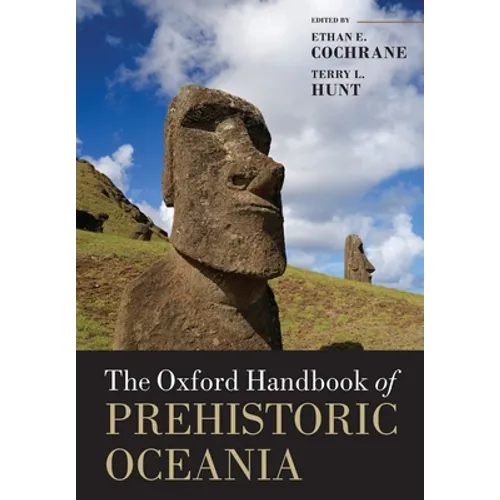
Oceania was the last region on earth to be permanently inhabited, with the final settlers reaching Aotearoa/New Zealand approximately AD 1300. This is about the same time that related Polynesian populations began erecting Easter Island's gigantic statues, farming the valley slopes of Tahiti and similar islands, and moving finely made basalt tools over several thousand kilometers of open ocean between Hawai'i, the Marquesas, the Cook Islands, and archipelagos in between.
The remarkable prehistory of Polynesia is one chapter of Oceania's human story.Almost 50,000 years prior, people entered Oceania for the first time, arriving in New Guinea and its northern offshore islands shortly thereafter, a biogeographic region labelled Near Oceania and including parts of Melanesia. Near Oceania saw the independent development of agriculture and has a complex history resulting in the greatest linguistic diversity in the world. Beginning 1000 BC, after millennia of gradually accelerating cultural change in Near Oceania, some groups sailed east from this space of inter-visible islands and entered Remote Oceania, rapidly colonizing the widely separated separated archipelagos from Vanuatu to SAmoa with purposeful, return voyages, and carrying an intricately decorated pottery called Lapita. From this common cultural foundation these populations developed separate, but occasionally connected, cultural traditions over the next 3000 years. Western Micronesia, the archipelagos of Palau, Guam and the Marianas, was also colonized around 1500 BC by
canoes arriving from the west, beginning equally long sequences of increasingly complex social formations, exchange relationships and monumental constructions. All of these topics and others are presented in The Oxford Handbook of Prehistoric Oceania, written by Oceania's leading archaeologists and allied researchers. Chapters describe the cultural sequences of the region's major island groups, provide the most recent explanations for diversity and change in Oceanic prehistory, and lay the foundation for the next generation of research.
Author Biography
Ethan E. Cochrane is Associate Professor in Anthropology at the University of Auckland.
Number of Pages: 524
Dimensions: 1.3 x 9.6 x 6.8 IN
Publication Date: January 09, 2021