Skip to content
Welcome To Our Store.
100,000+ Products for Home, Medical, Office & Classroom Needs
Search
Skip to product information
1 of 2

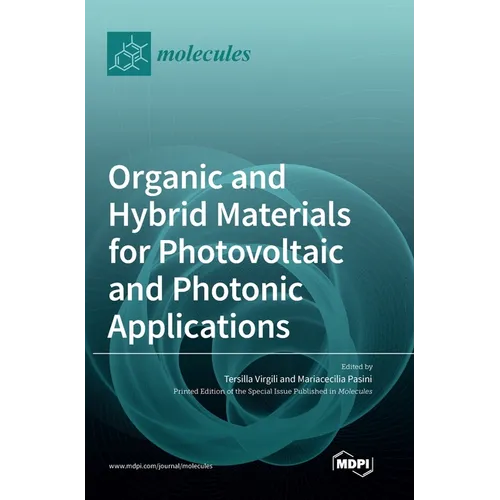
Organic and Hybrid Materials for Photovoltaic and Photonic Applications - Hardcover

$81.00 USD
$81.00 USD
Sale Sold out
Shipping calculated at checkout.
In stock (100 units), ready to be shipped

Available Offers

Fast delivery available on most orders

Multiple secure payment options accepted

Secure checkout with
  • American Express
  • Apple Pay
  • Diners Club
  • Discover
  • Google Pay
  • Mastercard
  • PayPal
  • Shop Pay
  • Visa

Flight Range: Up to 1,000 meters (3,280 feet)

Maximum Speed: 45 kilometers per hour (28 miles per hour)

For all orders exceeding a value of 100USD shipping is offered for free.

Returns will be accepted for up to 10 days of Customer’s receipt or tracking number on unworn items. You, as a Customer, are obliged to inform us via email before you return the item.

Otherwise, standard shipping charges apply. Check out our delivery Terms & Conditions for more details.

View Product Details
Shopping cart
Product Product subtotal Quantity Price Product subtotal
Organic and Hybrid Materials for Photovoltaic and Photonic Applications - Hardcover
$81.00/ea
$0.00
$81.00/ea $0.00

Product Description

by Tersilla Virgili (Guest Editor), Mariacecilia Pasini (Guest Editor)

Today, there is a huge demand for advanced materials capable of providing technological innovations. Among these, "organic semiconductors" combine the progress of semiconductors and plastic of the last century, becoming the subject of intense industrial and academic research. More recently, organic-inorganic hybrid functional materials have become a potential platform for applications in extremely diverse fields such as optics, microelectronics, transportation, health, energy, and energy storage. The interest in them is explained by the fact that it is possible to combine the best characteristics of both components in a large variety of combinations; in this way, they represent an intriguing class of materials with a large spectrum of applications.

This reprint contribution will consider recent developments in the field of organic and hybrid materials in two of the most useful and promising applications of the millennium: photovoltaics and photonics. Multiple aspects of the materials will be taken into consideration, from the synthesis and the photophysical characterization to the application.


Number of Pages: 190
Dimensions: 0.69 x 9.61 x 6.69 IN
Publication Date: February 27, 2023
you might like
