


Product Description
by D. Hood (Author)
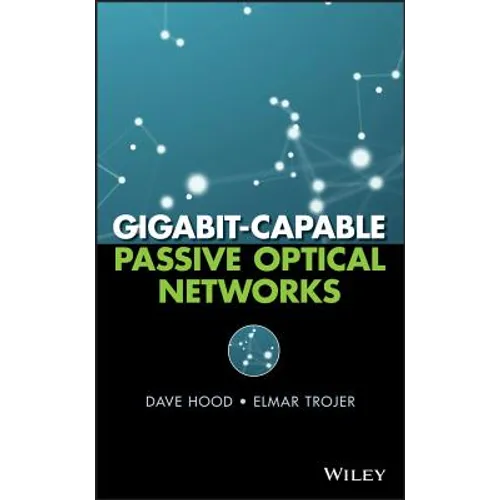
Gigabit-capable passive optical networks (G-PON) have a large and increasing base of support among telecommunications operators around the world. Written by two of the experts in the field, this book explains G-PON in detail, both the original 2.5 Gb/s version and XG-PON, the 10 Gb/s second generation. The foundation established by this book is also invaluable in understanding NG2 (next-generation 2) G-PON, which is built upon a number of XG-PON systems on parallel wavelengths. As well as a history that clarifies the reasons for many of the existing features, the book looks at current and evolving technology and discusses some of the alternatives for future access networks.
Back Jacket
ENABLES ENGINEERS TO BETTER UNDERSTAND, IMPLEMENT, AND COMPLY WITH G-PON STANDARDS
A passive optical network (PON) is a point-to-multipoint, fiber-to-the-premises network architecture in which unpowered optical splitters enable a single optical fiber to serve multiple premises. PONs consist of an optical line terminal at the service provider's central office and a number of optical network units near the end users. Compared with point-to-point architectures, PONs reduce the amount of fiber and central office equipment required.
Gigabit-capable PONs (G-PONs) are today's access network sweet spot, optimized to deliver IPTV and other high-bandwidth services at a reasonable cost. G-PONs have been deployed in numerous networks across the globe, and the trends indicate higher growth for G-PONs than other PON technologies.
Written by experts at the heart of G-PON development, standardization, and deployment, this text explains why the G-PON standards are what they are and how they impact the development of communication networks. It fully examines the historical development of the G-PON standards, pointing out alternatives and comparing them to other PON standards.
The book begins with an introduction to the evolution of G-PON technology and standards. Next, it covers:
- System requirements
- Optical layer
- Transmission convergence layer
- Management
- Services
- Other technologies such as Ethernet PON, wireless broadband, and access migration
This book not only examines current standards and technology, it also looks at evolving technology, discussing the advantages and disadvantages of various access networks currently under investigation.
Gigabit-capable Passive Optical Networks is essential for all engineers responsible for developing and maintaining G-PONs, providing them with information and guidance they need to fully understand, implement, and comply with the standards.
Author Biography
DAVE HOOD is a Senior Systems Engineer at Ericsson AB. He has been involved with passive optical networks since they were first conceived in the 1980s. He is presently active in the FSAN and ITU communities, where, among other responsibilities, he serves as editor of OMCI Recommendation G.988.
ELMAR TROJER is a Senior Systems Engineer at Ericsson AB, where he has developed dynamic line management solutions for ADSL2+ and VDSL2 and prototyped the DSL automatic optimizer that became an Ericsson product. He also prototyped the world's first Gb/s passive optical network system.