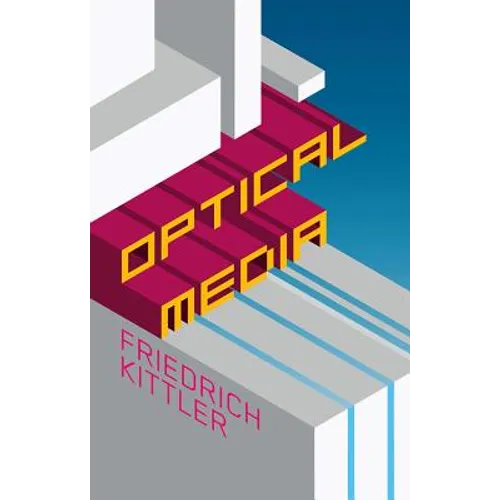
Product Description
by Friedrich Kittler (Author)
This major new book provides a concise history of optical media from Renaissance linear perspective to late twentieth-century computer graphics. Kittler begins by looking at European painting since the Renaissance in order to discern the principles according to which modern optical perception was organized. He also discusses the development of various mechanical devices, such as the camera obscura and the laterna magica, which were closely connected to the printing press and which played a pivotal role in the media war between the Reformation and the Counter-Reformation.
After examining this history, Kittler then addresses the ways in which images were first stored and made to move, through the development of photography and film. He discusses the competitive relationship between photography and painting as well as between film and theater, as innovations like the Baroque proscenium or "picture-frame" stage evolved from elements that would later constitute cinema. The central question, however, is the impact of film on the ancient monopoly of writing, as it not only provoked new forms of competition for novelists but also fundamentally altered the status of books. In the final section, Kittler examines the development of electrical telecommunications and electronic image processing from television to computer simulations.
In short, this book provides a comprehensive introduction to the history of image production that is indispensable for anyone wishing to understand the prevailing audiovisual conditions of contemporary culture.
Back Jacket
Friedrich Kittler's lecture series provides a concise history of optical media from Renaissance linear perspective to late twentieth-century computer graphics. He begins by looking at European painting since the Renaissance in order to discern the principles according to which modern optical perception was organised. Kittler also discusses the development of various mechanical devices, like the camera obscura and the laterna magica, which were closely connected to the printing press and which played a pivotal role in the media war between the Reformation and the Counterreformation. After examining this history, Kittler then addresses the ways in which images were first stored and made to move through the development of photography and film. Kittler discusses the competitive relationship between photography and painting as well as between film and theater, as innovations like the Baroque proscenium or "picture-frame" stage evolved from elements that would later constitute cinema. The central question, however, is the impact of film on the ancient monopoly of writing, as it not only provoked new forms of competition for novelists but also fundamentally altered the status of books. In the final section, Kittler examines the development of electrical telecommunications and electronic image processing from television to computer simulations. In short, these lectures provide a comprehensive introduction to the history of image production, which is indispensable for anyone wishing to understand the prevailing audiovisual conditions of contemporary culture.