Skip to content
Welcome To Our Store.
100,000+ Products for Home, Medical, Office & Classroom Needs
Search
Skip to product information
1 of 1

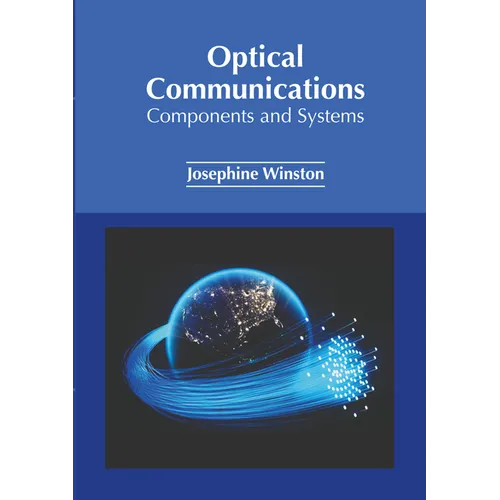
Optical Communications: Components and Systems - Hardcover

$195.30 USD
$195.30 USD
Sale Sold out
Shipping calculated at checkout.
In stock (100 units), ready to be shipped

Available Offers

Fastest Delivery Tomorrow With Vip DealOrder within 1 hr 8 mins.

Instant 10% Discount On HDFC Banks Credit/Debit Cards EMI and CreditCard

Secure checkout with
  • American Express
  • Apple Pay
  • Diners Club
  • Discover
  • Google Pay
  • Mastercard
  • PayPal
  • Shop Pay
  • Visa

Flight Range: Up to 1,000 meters (3,280 feet)

Maximum Speed: 45 kilometers per hour (28 miles per hour)

For all orders exceeding a value of 100USD shipping is offered for free.

Returns will be accepted for up to 10 days of Customer’s receipt or tracking number on unworn items. You, as a Customer, are obliged to inform us via email before you return the item.

Otherwise, standard shipping charges apply. Check out our delivery Terms & Conditions for more details.

View Product Details
Shopping cart
Product Product subtotal Quantity Price Product subtotal
Optical Communications: Components and Systems - Hardcover
$195.30/ea
$0.00
$195.30/ea $0.00

Product Description

by Josephine Winston (Editor)

Optical communication refers to any type of communication that uses light to carry information. An optical communication system is composed of three major components, which include a transmitter, channel and receiver. Transmitter is used to encode a message into an optical signal. Semiconductor devices such as light-emitting diodes (LEDs) and laser diodes are the most commonly used transmitters. The function of a channel is to carry the signal to its destination. Receiver is a component that reproduces the message from the received optical signal. Modern communication relies on optical networking systems which use optical fiber, optical amplifiers, lasers, switches, and routers. The most common type of channel used for optical communications is the optical fiber. The light in an optical fiber is guided by the principle of total internal reflection. The main advantages of optical communication include high bandwidth, exceptionally low loss, large transmission range, and no electromagnetic interference. This book includes some of the vital pieces of work being conducted across the world on various topics related to optical communications. It will serve as a valuable source of reference for graduate and postgraduate students.

Number of Pages: 243
Dimensions: 0.56 x 10 x 7 IN
Publication Date: September 26, 2023
you might like