Product Description
by Naomi Reshotko (Author)
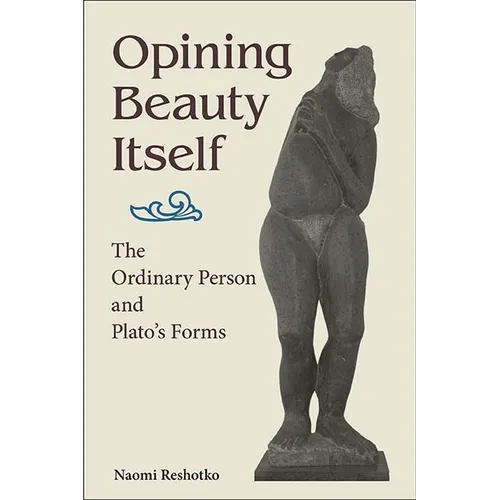
Argues that Plato thinks that ordinary people grapple with the Forms and can make epistemological progress, even if they never achieve knowledge.
In Opining Beauty Itself, Naomi Reshotko examines Plato's discussions of epistemological states that fall short of knowledge. Wary that interpretations of Plato's epistemology often omit a detailed analysis of the way he deploys the epistemological concepts that are inferior to, but often prerequisites for, knowledge, Reshotko argues that we must understand these inferior prerequisite states, especially belief (doxa), before we can understand what Plato thought about knowledge. Examining how recollection provides what is required for inquiry, Reshotko argues that recollection does not afford doxa-let alone what contemporary philosophers call 'true belief.' Rather, recollection is responsible for an ability to refer that is a condition for every kind of doxa and for knowledge. Reshotko concludes that Plato regards doxa as the fabric of all the other epistemic states that fall short of knowledge, and develops a comprehensive view of Plato's deployment of doxa that can serve as a foundation for further interpretation of Plato's epistemology. In the process, Reshotko shows that, for Plato, ordinary people do opine the Forms and can make progress toward knowledge of them, even if that knowledge is never achieved.
Author Biography
Naomi Reshotko is Professor of Philosophy at the University of Denver. She is the author of Socratic Virtue: Making the Best of the Neither-Good-Nor-Bad.