Product Description
by Charles River (Author)
Freedom of the press isn't just a fundamental right in America but a key part of the democratic process. When the United States secured its independence against Britain in the War of Independence in 1783, there was no certainty about what the new country would look like in terms of national governance. In 1787, delegates from the various states convened in Philadelphia to draft a constitution that would define this.
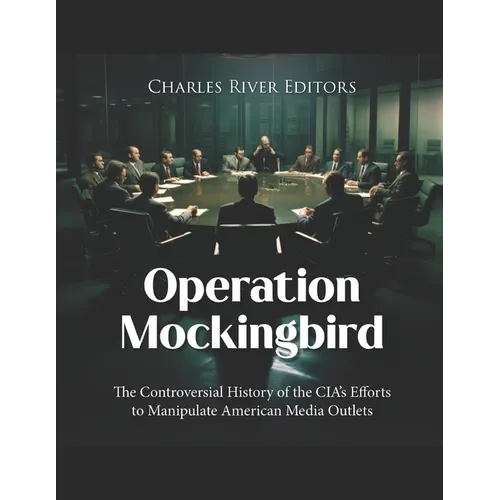
The process involved some fundamental challenges: the new federal government had to be strong enough to act effectively at a national level but not so strong that the rights of states and individual citizens would be subsumed. After a great deal of debate, a solution was agreed upon. The House of Representatives would represent all of the people of the United States, while the Senate would represent the interest of individual states. The president would be elected by the Electoral College. This constitution was adopted in September 1887 and ratified by all states by 1890. However, it contained an important proviso: the Constitution would be subject to amendment through a complex and lengthy process. For many people in the US, especially those suspicious of the power of the new federal government, this was vital. Just two years after the new constitution was adopted, a new Bill of Rights was raised that suggested a total of 12 amendments. The First Amendment (and to many people, one of the most important) forbade Congress from passing laws that related to religion, but also from "abridging the freedom of speech, or of the press." Freedom of the press became one of the core principles of democracy in the United States. People could only place their votes in an informed way if the press was free to provide information about politicians and their actions. Politicians must also know that their actions were accountable through a press that informed voters honestly and accurately.Up to the 1960s, most Americans were confident they had access to a truly free press, but then series of revelations emerged that suggested the Central Intelligence Agency (CIA) had been subverting journalists in the US and elsewhere through the use of bribery, blackmail, and covert operations. By the late 1970s, this alleged CIA plan had a name: Operation Mockingbird. Many people were understandably horrified at the notion that the federal government had attempted to operate counter to the First Amendment through one of its intelligence agencies, and Operation Mockingbird was widely discussed. These debates continue to the present day, including whether there actually was a covert CIA operation named Mockingbird, whether the operation truly sought to subvert the press in the US and elsewhere, and whether the operation really ended by 1976, as the CIA claimed. As such, nearly 50 years later, Operation Mockingbird remains a controversial topic.
Number of Pages: 46
Dimensions: 0.1 x 11 x 8.5 IN
Publication Date: January 16, 2024