Skip to content
Welcome To Our Store.
100,000+ Products for Home, Medical, Office & Classroom Needs
Search
Skip to product information
1 of 1

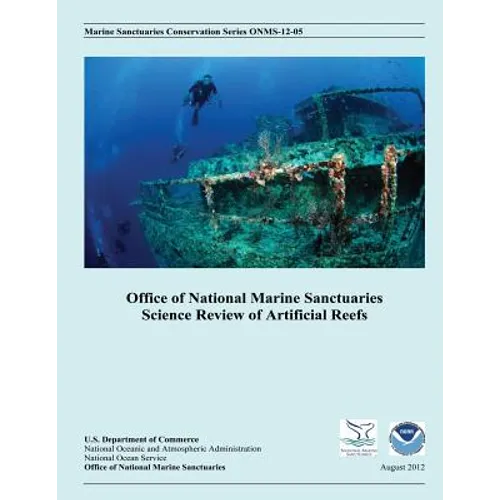
Office of National Marine Sanctuaries Science Review of Artificial Reefs - Paperback

$21.58 USD
$21.58 USD
Sale Sold out
Shipping calculated at checkout.
In stock (100 units), ready to be shipped

Available Offers

Fastest Delivery Tomorrow With Vip DealOrder within 1 hr 8 mins.

Instant 10% Discount On HDFC Banks Credit/Debit Cards EMI and CreditCard

Secure checkout with
  • American Express
  • Apple Pay
  • Diners Club
  • Discover
  • Google Pay
  • Mastercard
  • PayPal
  • Shop Pay
  • Visa

Flight Range: Up to 1,000 meters (3,280 feet)

Maximum Speed: 45 kilometers per hour (28 miles per hour)

For all orders exceeding a value of 100USD shipping is offered for free.

Returns will be accepted for up to 10 days of Customer’s receipt or tracking number on unworn items. You, as a Customer, are obliged to inform us via email before you return the item.

Otherwise, standard shipping charges apply. Check out our delivery Terms & Conditions for more details.

View Product Details
Shopping cart
Product Product subtotal Quantity Price Product subtotal
Office of National Marine Sanctuaries Science Review of Artificial Reefs - Paperback
$21.58/ea
$0.00
$21.58/ea $0.00

Product Description

by Noaa Office of National Marine Sanctuari (Author)

Artificial reefs are human-made structures that are either deliberately or unintentionally submerged underwater, commonly with the result of mimicking some characteristics of a natural reef. Artificial reefs alter local habitat by providing hard substrate and complex vertical relief where typically none previously existed (Bohnsack and Sutherland 1985, Sheehy and Vik 1992, Sheehy and Vik 2010). They may be created from a variety of sources and materials including the intentional sinking of ships and barges, rubble, concrete, rocks, stone, boulders, steel, and metal, etc. (Baine 2001). They may also be created through unintentional means (e.g., shipwrecks that can become historical in nature) and through structures built for other purposes (e.g., decommissioned oil and gas platforms, breakwaters1, jetties, bridges, offshore lighthouses, air force towers, navigational aids, marine data buoys, etc.). These various materials have benefits and drawbacks when used in artificial reef construction.


Number of Pages: 48
Dimensions: 0.1 x 11.02 x 8.5 IN
Publication Date: January 31, 2014
you might like
