Skip to content
Welcome To Our Store.
100,000+ Products for Home, Medical, Office & Classroom Needs
Search
Skip to product information
1 of 2

Occupying Power: Sex Workers and Servicemen in Postwar Japan - Hardcover

$188.10 USD
$188.10 USD
Sale Sold out
Shipping calculated at checkout.
In stock (100 units), ready to be shipped

Available Offers

Fast delivery available on most orders

Multiple secure payment options accepted

Secure checkout with
  • American Express
  • Apple Pay
  • Diners Club
  • Discover
  • Google Pay
  • Mastercard
  • PayPal
  • Shop Pay
  • Visa

Flight Range: Up to 1,000 meters (3,280 feet)

Maximum Speed: 45 kilometers per hour (28 miles per hour)

For all orders exceeding a value of 100USD shipping is offered for free.

Returns will be accepted for up to 10 days of Customer’s receipt or tracking number on unworn items. You, as a Customer, are obliged to inform us via email before you return the item.

Otherwise, standard shipping charges apply. Check out our delivery Terms & Conditions for more details.

View Product Details
Shopping cart
Product Product subtotal Quantity Price Product subtotal
Occupying Power: Sex Workers and Servicemen in Postwar Japan - Hardcover
$188.10/ea
$0.00
$188.10/ea $0.00

Product Description

by Sarah Kovner (Author)

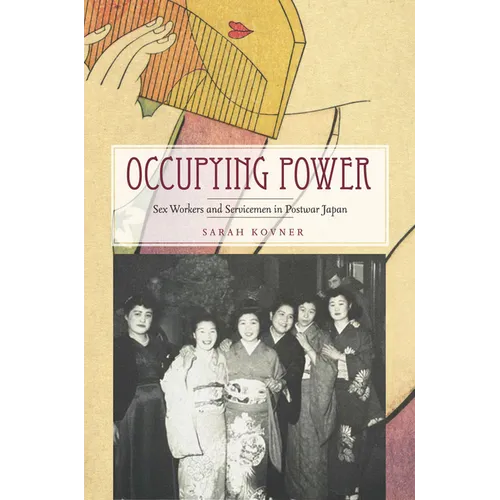
The year was 1945. Hundreds of thousands of Allied troops poured into war-torn Japan and spread throughout the country. The effect of this influx on the local population did not lessen in the years following the war's end. In fact, the presence of foreign servicemen also heightened the visibility of certain others, particularly panpan--streetwalkers--who were objects of their desire.

Occupying Power shows how intimate histories and international relations are interconnected in ways scholars have only begun to explore. Sex workers who catered to servicemen were integral to the postwar economic recovery, yet they were nonetheless blamed for increases in venereal disease and charged with diluting the Japanese race by producing mixed-race offspring. In 1956, Japan passed its first national law against prostitution, which produced an unanticipated effect. By ending a centuries-old tradition of sex work regulation, it made sex workers less visible and more vulnerable. This probing history reveals an important but underexplored aspect of the Japanese occupation and its effect on gender and society. It shifts the terms of debate on a number of controversies, including Japan's history of forced sexual slavery, rape accusations against U.S. servicemen, opposition to U.S. overseas bases, and sexual trafficking.

Author Biography

Sarah Kovner is Assistant Professor of History and Asian Studies at the University of Florida.

Number of Pages: 240
Dimensions: 0.9 x 9.1 x 6.1 IN
Illustrated: Yes
Publication Date: February 08, 2012
you might like

