Skip to content
Save 5% on your next order with code PREMIUM5!
100,000+ Products for Home, Medical, Office & Classroom Needs
Search
Skip to product information
1 of 1

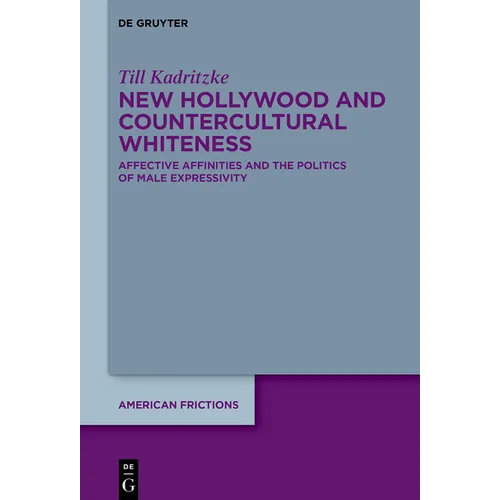
New Hollywood and Countercultural Whiteness: Affective Affinities and the Politics of Male Expressivity - Hardcover

$188.08 USD
$188.08 USD
Sale Sold out
Shipping calculated at checkout.
In stock (100 units), ready to be shipped

Available Offers

Fast delivery available on most orders

Multiple secure payment options accepted

Secure checkout with
  • American Express
  • Apple Pay
  • Diners Club
  • Discover
  • Google Pay
  • Mastercard
  • PayPal
  • Shop Pay
  • Visa

Flight Range: Up to 1,000 meters (3,280 feet)

Maximum Speed: 45 kilometers per hour (28 miles per hour)

For all orders exceeding a value of 100USD shipping is offered for free.

Returns will be accepted for up to 10 days of Customer’s receipt or tracking number on unworn items. You, as a Customer, are obliged to inform us via email before you return the item.

Otherwise, standard shipping charges apply. Check out our delivery Terms & Conditions for more details.

View Product Details
Shopping cart
Product Product subtotal Quantity Price Product subtotal
New Hollywood and Countercultural Whiteness: Affective Affinities and the Politics of Male Expressivity - Hardcover
$188.08/ea
$0.00
$188.08/ea $0.00

Product Description

by Till Kadritzke (Author)

In the late 1960s, the white counterculture enters the screens with Bonnie and Clyde and Easy Rider; in 1976, a backlash seems to have taken place with white male protagonists such as Travis Bickle, Howard Beale, and Rocky Balboa being surrounded by non-white and female others. But these films cannot be neatly identified as left-wing or right-wing, liberal or conservative; in their politics of affect, they rather express important affinities.

This study proposes the New Hollywood as an entry point into a cultural history of the postwar era sensitive to the intersections of affect, race, and gender. Following a narrative that spreads from the immediate postwar years to the 1970s, the study examines how New Hollywood films were part of a discursive and affective reconfiguration of white masculinity: the emergence of a subject position of countercultural whiteness and its affective style of expressivity.

Examining affective affinities between films of the era complicates the narrative of polarization that shapes commentary on the history of American politics, emphasizing instead the shared racialized and gendered politics of the white counterculture and those reactionary forces that allegedly lashed back against it.

Author Biography

Till Kadritzke, Freie Universit?t Berlin, Germany

Number of Pages: 262
Dimensions: 0.75 x 9.21 x 6.14 IN
Publication Date: November 18, 2024
you might like