


Product Description
by Stephen Dean (Author)
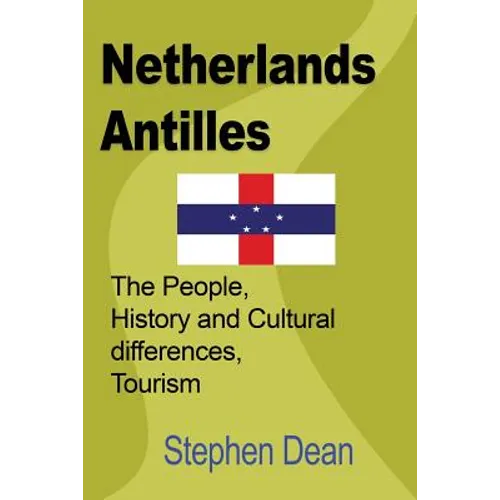
Netherlands Antilles. The People, History and Cultural differences, Tourism. Despite the fact that these six islands have been and continue to be politically tied to the Kingdom of the Netherlands, each island has its own particular territory and history. Their differences go beyond flags, as they also have different ethnic heritages. For example, half of the population of Saba is of western European descent, while the residents of Cura ao, Bonaire and the other half of the population of Saba are mainly of African descent. St. Maarten, meanwhile, shows a mixture of African and European heritages. Distinctively, Arubans have a population majority of European and American Indian descent. Cura ao and Bonaire are both the products of constant migrations and socio-musical contacts and share much of their musical traditions with the Spanish and American Indian populations of the nearly South American coastal areas. Three major influences can be seen in the musical forms of the two islands: that of western Africa, European (especially Spain) and indigenous. During the slavery era, African singing and dancing adapted to the cultural influences of the New World. The simadan and bari dances are the best known. These dances and songs evolved until they became festivals that survived and became an important part of Bonaire's life and culture. Simadan is a festival with African roots that incorporates traditional foods, songs and dances. Until the 19th century, simadan was celebrated with a procession through the fields while the songs known as se were sung. The dancers' steps were called wapa and imitated the movements used to plant and harvest crops on the plantation. The songs are sung in the old language of the slaves, a form of papiamento that is known as guene. The singers are accompanied by music played with the tambu drum, interspersed with sounds from instruments made from tools, such as the chapi (hoe) and a cachu (a trumpet made from a bull horn)