Skip to content
Welcome To Our Store.
100,000+ Products for Home, Medical, Office & Classroom Needs
Search
Skip to product information
1 of 2

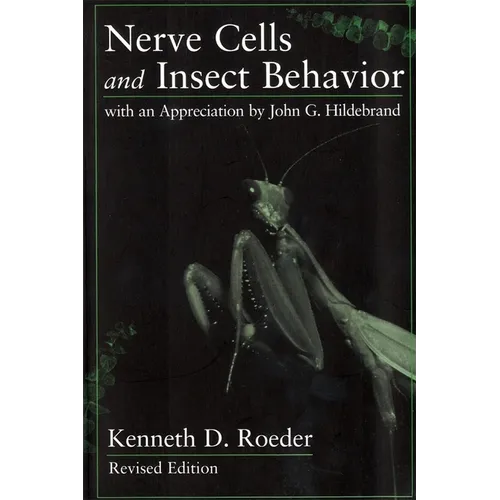
Nerve Cells and Insect Behavior: With an Appreciation by John G. Hildebrand, Revised Edition - Paperback

$70.20 USD
$70.20 USD
Sale Sold out
Shipping calculated at checkout.
In stock (100 units), ready to be shipped

Available Offers

Fast delivery available on most orders

Multiple secure payment options accepted

Secure checkout with
  • American Express
  • Apple Pay
  • Diners Club
  • Discover
  • Google Pay
  • Mastercard
  • PayPal
  • Shop Pay
  • Visa

Flight Range: Up to 1,000 meters (3,280 feet)

Maximum Speed: 45 kilometers per hour (28 miles per hour)

For all orders exceeding a value of 100USD shipping is offered for free.

Returns will be accepted for up to 10 days of Customer’s receipt or tracking number on unworn items. You, as a Customer, are obliged to inform us via email before you return the item.

Otherwise, standard shipping charges apply. Check out our delivery Terms & Conditions for more details.

View Product Details
Shopping cart
Product Product subtotal Quantity Price Product subtotal
Nerve Cells and Insect Behavior: With an Appreciation by John G. Hildebrand, Revised Edition - Paperback
$70.20/ea
$0.00
$70.20/ea $0.00

Product Description

by Kenneth D. Roeder (Author)

The strike of a praying mantis's forelegs is so fast that, once they are set in motion, the mantis cannot control its aim. How does it ever manage to catch a fly? A moth negotiating the night air hears the squeak of a hunting bat on the wing, and tumbles out of harm's way. How?

Insects are ideal subjects for neurophysiological studies, and at its simplest level this classic book relates the activities of nerve cells to the activities of insects, something that had never been attempted when the book first appeared in 1963. In several elegant experiments--on the moth, the cockroach, and the praying mantis--Roeder shows how stimulus and behavior are related through the nervous system and suggests that the insect brain appears to control behavior by determining which of the various built-in activity patterns will appear in a given situation. This slim volume remains invaluable to an understanding of the nervous mechanisms responsible for insect behavior.
Number of Pages: 256
Dimensions: 0.68 x 8.17 x 5.5 IN
Publication Date: March 15, 1998
you might like