Skip to content
Welcome To Our Store.
100,000+ Products for Home, Medical, Office & Classroom Needs
Search
Skip to product information
1 of 1

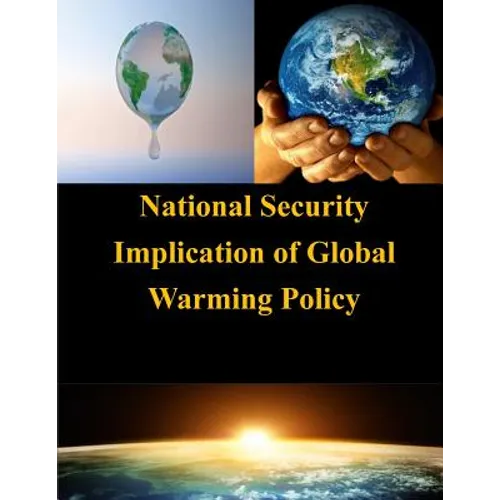
National Security Implication of Global Warming Policy - Paperback

$17.48 USD
$17.48 USD
Sale Sold out
Shipping calculated at checkout.
In stock (100 units), ready to be shipped

Available Offers

Fastest Delivery Tomorrow With Vip DealOrder within 1 hr 8 mins.

Instant 10% Discount On HDFC Banks Credit/Debit Cards EMI and CreditCard

Secure checkout with
  • American Express
  • Apple Pay
  • Diners Club
  • Discover
  • Google Pay
  • Mastercard
  • PayPal
  • Shop Pay
  • Visa

Flight Range: Up to 1,000 meters (3,280 feet)

Maximum Speed: 45 kilometers per hour (28 miles per hour)

For all orders exceeding a value of 100USD shipping is offered for free.

Returns will be accepted for up to 10 days of Customer’s receipt or tracking number on unworn items. You, as a Customer, are obliged to inform us via email before you return the item.

Otherwise, standard shipping charges apply. Check out our delivery Terms & Conditions for more details.

View Product Details
Shopping cart
Product Product subtotal Quantity Price Product subtotal
National Security Implication of Global Warming Policy - Paperback
$17.48/ea
$0.00
$17.48/ea $0.00

Product Description

by U. S. Army War College (Author)

Although numerous historical examples demonstrate how actual climate change has contributed to the rise and fall of powers, global warming, in and of itself, is not our nation's greatest climate threat. Rather, the greatest climate threat to national security is the world's perception of climate change and the resulting governmental and intergovernmental policies enacted to reduce the theorized anthropogenic greenhouse warming. As governments become convinced that global warming is universally bad and humans are the primary cause, political leaders may develop ill-advised policies restricting US access and use of global energy supplies, weaken the US economy, and unfairly advantage rising developing nations. These three actions could combine to threaten United States security by reducing our relative national power in comparison with rising nations. Rather than adopting multilateral policies aimed at reducing the carbon emissions of developed nations, the United States should continue to resist adopting Kyoto Protocol type policies to preserve our national wealth to better fund Homeland Defense and national security.

Number of Pages: 26
Dimensions: 0.05 x 11.02 x 8.5 IN
Publication Date: October 27, 2014
you might like