


Product Description
by James C. Kearney (Author)
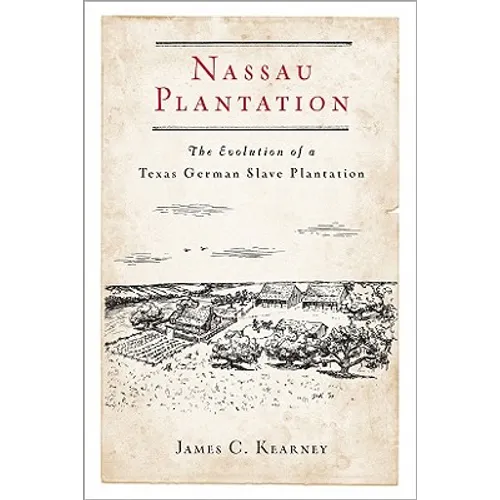
In the 1840s an organization of German noblemen, the Mainzner Adelsverein, attempted to settle thousands of German emigrants on the Texas frontier. Nassau Plantation, located near modern-day Round Top, Texas, in northern Fayette County, was a significant part of this story. No one, however, has adequately documented the role of the slave plantation or given a convincing explanation of the Adelsverein from the German point of view.
James C. Kearney has studied a wealth of original source material (much of it in German) to illuminate the history of the plantation and the larger goals and motivation of the Adelsverein, both in Texas and in Germany. Moreover, this new study highlights the problematic relationship of German emigrants to slavery. Few today realize that the society's original colonization plan included ownership and operation of slave plantations. Ironically, the German settlements the society later established became hotbeds of anti-slavery and anti-secessionist sentiment.
Responding to criticism in Germany, the society declared its colonies to be "slave free zones" in 1845. This act thrust the society front and center into the complicated political landscape of Texas prior to annexation. James A. Mayberry, among others, suspected an English-German conspiracy to flood the state with anti-slavery immigrants and delivered a fiery speech in the legislature denouncing the society.
In the 1850s the plantation became a magnet for German immigration into Fayette and Austin Counties. In this connection, Kearney explores the role and influence of Otto von Roeder, a largely neglected but important Texas-German. Another chapter deals with the odyssey of the extended von Rosenberg family, who settled on the plantation in 1850 and helped to elevate the nearby town of Round Top into a regional center of culture and education. Many members of the family subsequently rose to positions of leadership and influence in Texas.
Several notable personalities graced the plantation--Carl Prince of Solms-Braunfels, Johann Otto Freiherr von Meusebach, botanist F. Lindheimer, and the renowned naturalist Dr. Ferdinand Roemer, to name a few. Dramatic events also occurred at the plantation, including a deadly shootout, a successful escape by two slaves (documented in an unprecedented way), and litigation over ownership that wound its way to both the Texas Supreme Court and the U.S. Supreme Court.
Author Biography
JAMES C. KEARNEY received his Ph.D. in German and history from the University of Texas. He taught German at Katy High School and has been a featured speaker at numerous conventions and symposia on Texas-German subjects.