Skip to content
Welcome To Our Store.
100,000+ Products for Home, Medical, Office & Classroom Needs
Search
Skip to product information
1 of 1

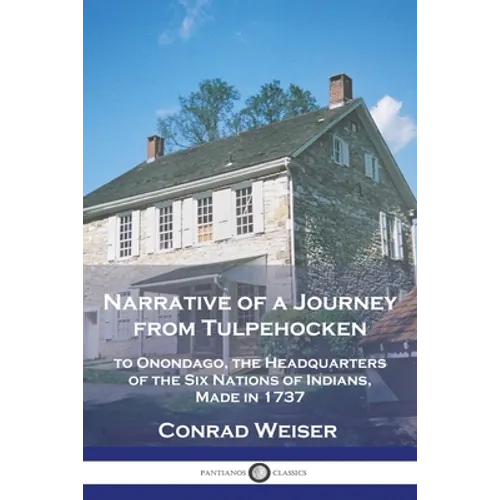
Narrative of a Journey from Tulpehocken: to Onondago, the Headquarters of the Six Nations of Indians, Made in 1737 - Paperback

$18.68 USD
$18.68 USD
Sale Sold out
Shipping calculated at checkout.
In stock (100 units), ready to be shipped

Available Offers

Fast delivery available on most orders

Multiple secure payment options accepted

Secure checkout with
  • American Express
  • Apple Pay
  • Diners Club
  • Discover
  • Google Pay
  • Mastercard
  • PayPal
  • Shop Pay
  • Visa

Flight Range: Up to 1,000 meters (3,280 feet)

Maximum Speed: 45 kilometers per hour (28 miles per hour)

For all orders exceeding a value of 100USD shipping is offered for free.

Returns will be accepted for up to 10 days of Customer’s receipt or tracking number on unworn items. You, as a Customer, are obliged to inform us via email before you return the item.

Otherwise, standard shipping charges apply. Check out our delivery Terms & Conditions for more details.

View Product Details
Shopping cart
Product Product subtotal Quantity Price Product subtotal
Narrative of a Journey from Tulpehocken: to Onondago, the Headquarters of the Six Nations of Indians, Made in 1737 - Paperback
$18.68/ea
$0.00
$18.68/ea $0.00

Product Description

by Conrad Weiser (Author)

Conrad Weiser recounts his life and his famous journey through the Tulpehocken lands, on his way to meeting a group of Native American chiefs for negotiations.

The author describes his childhood in Germany, and how his father sold all of his land and possessions before departing for a new life in the colonies of New England. The beginning of the 18th century was a difficult and precarious time for the European settlers in North America; conflicts with the Native American populations were frequent, with skirmishes over land and resources a constant danger. To make matters worse, entering into negotiations and dialogue with the native population was difficult, as very few of the settlers understood the languages of the tribes.

When Conrad was sixteen, his father agreed to a proposal from a local Native American chief: he would live with the tribe, learning their way of life, their speech, and their methods of surviving and thriving off the land. This decision redefined Weiser's life: he became highly respected by both the tribes and the European settlers, engaging in dialogue that averted conflict and saved lives. While he worked in various jobs throughout adulthood, such as farming and tanning, he was called away to act as a diplomat and interpreter on many occasions.


Number of Pages: 92
Dimensions: 0.22 x 9 x 6 IN
Publication Date: January 01, 1853
you might like
