


Product Description
by Corey Kai Nelson Schultz (Author)
Since 1979, China has been undergoing a period of immense social and economic change, transitioning from state-run economics to free market capitalism. This book focuses on how the 'Reform Era' has been constructed in the work of the director Jia Zhangke, analysing the archetypal class figures of worker, peasant, soldier, intellectual and entrepreneur that are found in his films. Examining how these figures are represented, and how Jia's cinematography creates those 'structures of feeling' that concretise around a particular time and place, the book argues that Jia's cinema should be understood not just as narratives that represent Chinese social transition, but also as an effort to engage the audience's emotional responses through representation, symbolism and the affective experience of specific cinematic tropes.
Making an important contribution to scholarship about the Reform Era, and opening up many new areas in the larger fields of Chinese visual culture, cultural studies and the affective qualities of film, this is groundbreaking work about a cinematic culture in a period of profound transformation.
Front Jacket
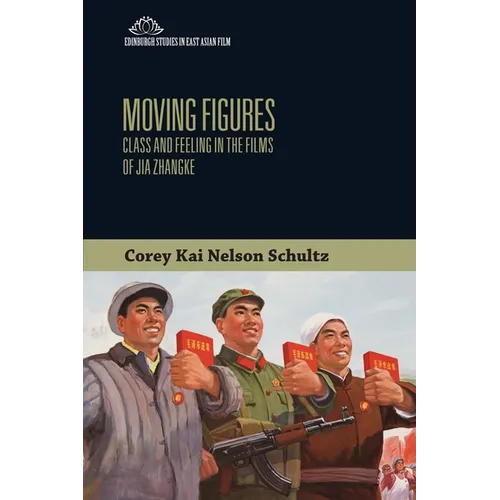
'An incisive and soundly researched contribution to the literature on Jia Zhangke. Schultz illuminates the class-based archetypes and affective structures of Jia's Reform-era cinema, offering a fresh way of thinking about one of China's most profoundly enigmatic filmmakers.' Gary Bettinson, Lancaster University Since 1979, China has been undergoing a period of immense social and economic change, transitioning from state-run economics and introducing capitalist market reforms. Moving Figures focuses on how this period has been constructed in the work of the director Jia Zhangke by analyzing the class figures of worker, peasant, soldier, intellectual, and entrepreneur that are found in his films. Schultz argues that the figures' representation and cinematography create what Raymond Williams terms "structures of feeling," which capture and evoke the felt sense of this time and place, and proposes that Jia's cinema should be understood not just as narratives that represent Chinese social transition, but also as an effort to engage the audience's emotional responses through representation, symbolism, and the affective experience of specific cinematic tropes. This book makes an important contribution to scholarship about contemporary China, opening up many new areas in the larger fields of Chinese visual culture, cultural studies and the affective qualities of film. It is a groundbreaking work about a cinematic culture in a period of profound transformation. Corey Kai Nelson Schultz is a lecturer in Film Studies at the University of Southampton. Cover image: 'The industry learns from Daqing, agriculture learns from Dazhai and the whole country learns from the People's Liberation Army'. Designer unknown, 1971, Shanghai renmin chubanshe. Cover design: [EUP logo] edinburghuniversitypress.com ISBN 978-1-4744-2161-4 Barcode
Author Biography
Corey Kai Nelson Schultz is Associate Professor at the University of Nottingham Ningbo China. He received his PhD from Goldsmiths, University of London, and his research areas are Chinese visual culture, film phenomenology and aesthetics. He has published in Asian Cinema, Film-Philosophy, Moving Image Review and Art Journal, Screen and Visual Communication.



