Skip to content
Save 5% on your next order with code PREMIUM5!
100,000+ Products for Home, Medical, Office & Classroom Needs
Search
Skip to product information
1 of 1

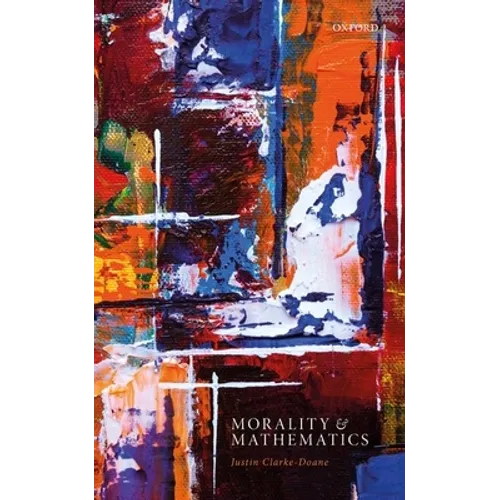
Morality and Mathematics - Hardcover

$179.55 USD
$179.55 USD
Sale Sold out
Shipping calculated at checkout.
In stock (20 units), ready to be shipped

Available Offers

Fast delivery available on most orders

Multiple secure payment options accepted

Secure checkout with
  • American Express
  • Apple Pay
  • Diners Club
  • Discover
  • Google Pay
  • Mastercard
  • PayPal
  • Shop Pay
  • Visa

Flight Range: Up to 1,000 meters (3,280 feet)

Maximum Speed: 45 kilometers per hour (28 miles per hour)

For all orders exceeding a value of 100USD shipping is offered for free.

Returns will be accepted for up to 10 days of Customer’s receipt or tracking number on unworn items. You, as a Customer, are obliged to inform us via email before you return the item.

Otherwise, standard shipping charges apply. Check out our delivery Terms & Conditions for more details.

View Product Details
Shopping cart
Product Product subtotal Quantity Price Product subtotal
Morality and Mathematics - Hardcover
$179.55/ea
$0.00
$179.55/ea $0.00

Product Description

by Justin Clarke-Doane (Author)

To what extent are the subjects of our thoughts and talk real? This is the question of realism. In this book, Justin Clarke-Doane explores arguments for and against moral realism and mathematical realism, how they interact, and what they can tell us about areas of philosophical interest more generally. He argues that, contrary to widespread belief, our mathematical beliefs have no better claim to being self-evident or provable than our moral beliefs. Nor do our mathematical beliefs have better claim to being empirically justified than our moral beliefs. It is also incorrect that reflection on the "genealogy" of our moral beliefs establishes a lack of parity between the cases. In general, if one is a moral antirealist on the basis of epistemological considerations, then one ought to be a mathematical antirealist as well. And, yet, Clarke-Doane shows that moral realism and mathematical realism do not stand or fall together -- and for a surprising reason. Moral questions, insofar
as they are practical, are objective in a sense that mathematical questions are not, and the sense in which they are objective can only be explained by assuming practical anti-realism. One upshot of the discussion is that the concepts of realism and objectivity, which are widely identified, are actually in tension. Another is that the objective questions in the neighborhood of factual areas like logic, modality, grounding, and nature are practical questions too. Practical philosophy should, therefore, take center stage.

Author Biography


Justin Clarke-Doane, Associate Professor of Philosophy, Columbia University

Justin Clarke-Doane is Associate Professor of Philosophy at Columbia University. He is also an Honorary Research Fellow at the University of Birmingham and an Adjunct Research Associate at Monash University. He has previously been Visiting Scholar at the Institute for the History and Philosophy of Science and Technology (IHPST) at Pantheon-Sorbonne University (Paris 1). His work centers on metaphysical and epistemological problems surrounding apparently a priori domains, such as morality, modality, mathematics, and logic. He received his PhD in Philosophy from New York University in 2011 and obtained his BA in Philosophy and Mathematics from New College of Florida in 2005.
Number of Pages: 208
Dimensions: 0.8 x 8.6 x 5.4 IN
Publication Date: May 25, 2020
you might like