Skip to content
Welcome To Our Store.
100,000+ Products for Home, Medical, Office & Classroom Needs
Search
Skip to product information
1 of 2

Money, Trains, and Guillotines: Art and Revolution in 1960s Japan - Paperback

$72.90 USD
$72.90 USD
Sale Sold out
Shipping calculated at checkout.
In stock (100 units), ready to be shipped

Available Offers

Fast delivery available on most orders

Multiple secure payment options accepted

Secure checkout with
  • American Express
  • Apple Pay
  • Diners Club
  • Discover
  • Google Pay
  • Mastercard
  • PayPal
  • Shop Pay
  • Visa

Flight Range: Up to 1,000 meters (3,280 feet)

Maximum Speed: 45 kilometers per hour (28 miles per hour)

For all orders exceeding a value of 100USD shipping is offered for free.

Returns will be accepted for up to 10 days of Customer’s receipt or tracking number on unworn items. You, as a Customer, are obliged to inform us via email before you return the item.

Otherwise, standard shipping charges apply. Check out our delivery Terms & Conditions for more details.

View Product Details
Shopping cart
Product Product subtotal Quantity Price Product subtotal
Money, Trains, and Guillotines: Art and Revolution in 1960s Japan - Paperback
$72.90/ea
$0.00
$72.90/ea $0.00

Product Description

by William Marotti (Author)

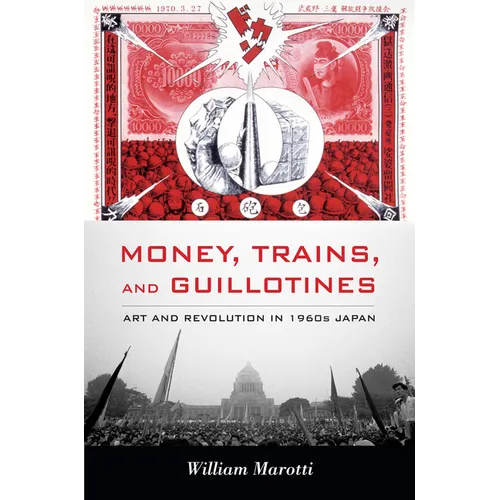
During the 1960s a group of young artists in Japan challenged official forms of politics and daily life through interventionist art practices. William Marotti situates this phenomenon in the historical and political contexts of Japan after the Second World War and the international activism of the 1960s. The Japanese government renewed its Cold War partnership with the United States in 1960, defeating protests against a new security treaty through parliamentary action and the use of riot police. Afterward, the government promoted a depoliticized everyday world of high growth and consumption, creating a sanitized national image to present in the Tokyo Olympics of 1964. Artists were first to challenge this new political mythology. Marotti examines their political art, and the state's aggressive response to it. He reveals the challenge mounted in projects such as Akasegawa Genpei's 1,000-yen prints, a group performance on the busy Yamanote train line, and a plan for a giant guillotine in the Imperial Plaza. Focusing on the annual Yomiuri Indépendant exhibition, he demonstrates how artists came together in a playful but powerful critical art, triggering judicial and police response. Money, Trains, and Guillotines expands our understanding of the role of art in the international 1960s, and of the dynamics of art and policing in Japan.

Author Biography

William Marotti is Professor of History at the University of California, Los Angeles.

Number of Pages: 464
Dimensions: 1 x 9.2 x 6.1 IN
Illustrated: Yes
Publication Date: March 27, 2013
you might like

