Skip to content
Welcome To Our Store.
100,000+ Products for Home, Medical, Office & Classroom Needs
Search
Skip to product information
1 of 1

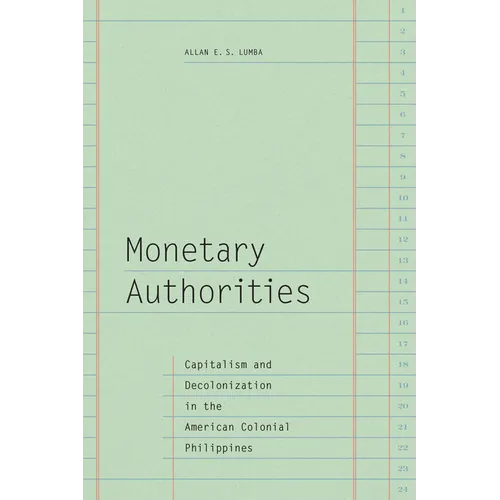
Monetary Authorities: Capitalism and Decolonization in the American Colonial Philippines - Hardcover

$166.79 USD
$166.79 USD
Sale Sold out
Shipping calculated at checkout.
In stock (100 units), ready to be shipped

Available Offers

Fastest Delivery Tomorrow With Vip DealOrder within 1 hr 8 mins.

Instant 10% Discount On HDFC Banks Credit/Debit Cards EMI and CreditCard

Secure checkout with
  • American Express
  • Apple Pay
  • Diners Club
  • Discover
  • Google Pay
  • Mastercard
  • PayPal
  • Shop Pay
  • Visa

Flight Range: Up to 1,000 meters (3,280 feet)

Maximum Speed: 45 kilometers per hour (28 miles per hour)

For all orders exceeding a value of 100USD shipping is offered for free.

Returns will be accepted for up to 10 days of Customer’s receipt or tracking number on unworn items. You, as a Customer, are obliged to inform us via email before you return the item.

Otherwise, standard shipping charges apply. Check out our delivery Terms & Conditions for more details.

View Product Details
Shopping cart
Product Product subtotal Quantity Price Product subtotal
Monetary Authorities: Capitalism and Decolonization in the American Colonial Philippines - Hardcover
$166.79/ea
$0.00
$166.79/ea $0.00

Product Description

by Allan E. S. Lumba (Author)

In Monetary Authorities Allan E. S. Lumba explores how the United States used monetary policy and banking systems to justify racial and class hierarchies, enforce capitalist exploitation, and counter movements for decolonization in the American colonial Philippines. Lumba shows that colonial economic experts justified American imperial authority by claiming that Filipinos did not possess the racial capacities to properly manage money. Financial independence, then, became a key metric of racial capitalism by which Filipinos had to prove their ability to self-govern. At the same time, the colonial state used its monetary authority to police the economic activities of colonized subjects and to curb movements for decolonization. It later offered a conditional form of decolonization that left the Philippines reliant on U.S. financial institutions. By showing how imperial governance was entwined with the racialization and regulation of monetary systems in the Philippines, Lumba illuminates a key mechanism through which the United States securitized the imperial world order.

Author Biography

Allan E. S. Lumba is Assistant Professor of History at Virginia Tech.

Number of Pages: 232
Dimensions: 0.56 x 9 x 6 IN
Publication Date: May 20, 2022
you might like

