


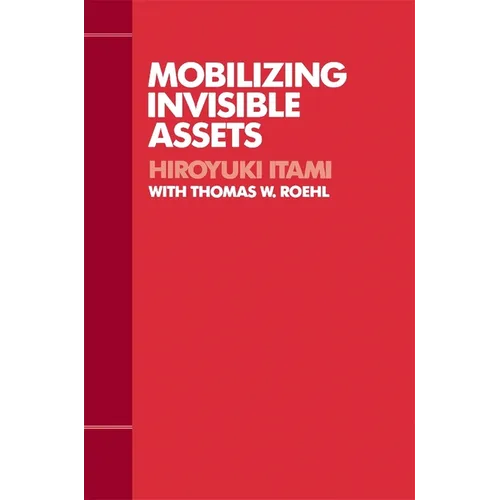
Product Description
by Hiroyuki Itami (Author), Thomas W. Roehl (With)
Successful corporate strategies, says this leading professor of management, depend upon dynamic marshaling of a firm's "invisible assets"--information-based resources such as technological know-how, the visibility of a brand name, or knowledge of a customer base--as well as tangible assets such as people, goods, and money. Hiroyuki Itami emphasizes the ways strategy must fit the firm's external environment (customers, competitors, and ever-changing technology) and also the importance of internal fit within the organization. He uses invisible assets as a single organizing concept to discuss the appropriateness of strategy in each area.
Strategy, Itami insists, must be adapted to rapidly changing conditions and must sometimes be prepared in advance of expected change. The most powerful strategy may often intentionally create imbalance in the short run in order to accumulate invisible assets and energize the organization. Itami examines successful strategies of Japanese firms, which have always operated in an environment of uncertainty and all-pervasive change. Sony and Honda are not the only examples, however--Itami also discusses IBM, Volkswagen, and the Swiss watch industry. The range of examples gives the book wide applicability and appeal to American business executives, who are now facing a similar situation of rapid change. The clarity and sound construction of Itami's argument will make it useful not only to MBAs and theorists of international business and comparative management, but also to "real world" planners and managers who are currently coping with just the sort of situations Itami describes.
Number of Pages: 200
Dimensions: 0.51 x 9.25 x 6.14 IN
Publication Date: October 01, 1991