


Product Description
by William E. Unrau (Author)
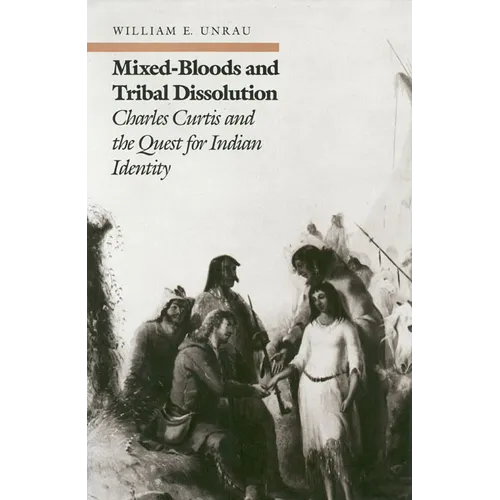
This book shows that without the cooperation of the"mixed-bloods," or part-Indians, dispossession of Indian lands by the U.S. government in the nineteenth and early twentieth centuries would have been much more difficult to accomplish. The relationship between the Métis and the loss of Indian lands, never before fully explored, is revealed in Unrau's study of Charles Curtis, a mixed-blood member of the Kansa-Kaws.
Curtis is best remembered as Herbert Hoover's vice-president, but he also served in Congress for more than 30 years. A successful lawyer and Republican politician, Curtis had spent his early years on a reservation but grew up comfortably and fully integrated into the white world. By virtue of his celebrated status, he became the most important figure in the debate over federal Indian policy during the late nineteenth and early twentieth centuries. As the Indian expert in Congress, Curtis had significant power in formulating and carrying out the assimilationist program that had been instituted, particularly by the Dawes Act, in the 1880s. The strategy was to encourage reservation Indians to reject communal life and reap the rewards of individual enterprise. Central to these developments were questions of ownership, land claims, allotments, tribal inheritance laws, and what constituted the public domain. The underlying issues, however, were Indian identification and assimilation. The government's actions--affecting schools, the federal courts, Indian Office personnel, allotment and inheritance laws, mineral leases, and the absorption of the Indian Territory into the state of Oklahoma--all bore the mark of Curtis's hand.
Number of Pages: 256
Dimensions: 0.95 x 9.58 x 6.34 IN
Illustrated: Yes
Publication Date: August 19, 2007



