Skip to content
Welcome To Our Store.
100,000+ Products for Home, Medical, Office & Classroom Needs
Search
Skip to product information
1 of 1

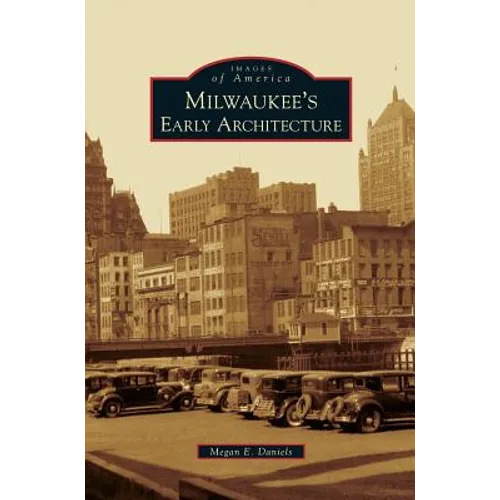
Milwaukee's Early Architecture - Hardcover

$34.54 USD
$34.54 USD
Sale Sold out
Shipping calculated at checkout.
In stock (100 units), ready to be shipped

Available Offers

Fastest Delivery Tomorrow With Vip DealOrder within 1 hr 8 mins.

Instant 10% Discount On HDFC Banks Credit/Debit Cards EMI and CreditCard

Secure checkout with
  • American Express
  • Apple Pay
  • Diners Club
  • Discover
  • Google Pay
  • Mastercard
  • PayPal
  • Shop Pay
  • Visa

Flight Range: Up to 1,000 meters (3,280 feet)

Maximum Speed: 45 kilometers per hour (28 miles per hour)

For all orders exceeding a value of 100USD shipping is offered for free.

Returns will be accepted for up to 10 days of Customer’s receipt or tracking number on unworn items. You, as a Customer, are obliged to inform us via email before you return the item.

Otherwise, standard shipping charges apply. Check out our delivery Terms & Conditions for more details.

View Product Details
Shopping cart
Product Product subtotal Quantity Price Product subtotal
Milwaukee's Early Architecture - Hardcover
$34.54/ea
$0.00
$34.54/ea $0.00

Product Description

by Megan E. Daniels (Author)

Initially dominated by simple renditions of East Coast architecture, Milwaukee developed from three pioneer settlements, those of Solomon Juneau, Byron Kilbourn, and George Walker three hubs from which three villages radiated outward into one city. Following the Civil War, Milwaukee s growth at the onset of the Industrial Era afforded the city a fanciful array of Victorian streetscapes. The 1890s followed with an era of ethnic architecture in which bold interpretations of German Renaissance Revival and Baroque designs paid homage to Milwaukee s overwhelming German population. At the turn of the century, Milwaukee s proximity to Chicago influenced the streetscape with classicized civic structures and skyscrapers designed by Chicago architects. World War I and the ensuing anti-German sentiment, as well as Prohibition, inevitably had adverse effects on Brew City. By the 1920s, Milwaukee s architecture had assimilated to the national aesthetic, suburban development was on the rise, and architectural growth would soon be stunted by the Great Depression."


Number of Pages: 130
Dimensions: 0.38 x 9.61 x 6.69 IN
Publication Date: July 14, 2010
you might like
