Skip to content
Welcome To Our Store.
100,000+ Products for Home, Medical, Office & Classroom Needs
Search
Skip to product information
1 of 1

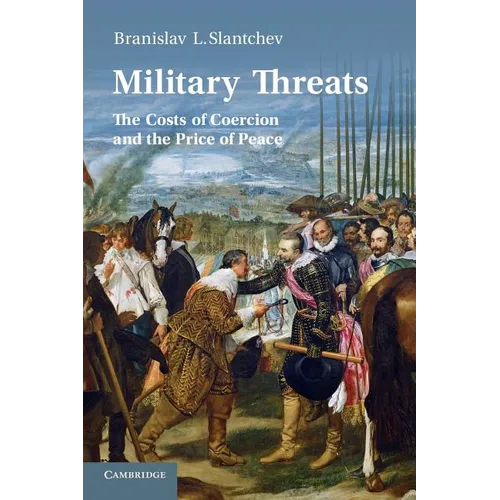
Military Threats: The Costs of Coercion and the Price of Peace - Paperback

$71.91 USD
$71.91 USD
Sale Sold out
Shipping calculated at checkout.
In stock (100 units), ready to be shipped

Available Offers

Fast delivery available on most orders

Multiple secure payment options accepted

Secure checkout with
  • American Express
  • Apple Pay
  • Diners Club
  • Discover
  • Google Pay
  • Mastercard
  • PayPal
  • Shop Pay
  • Visa

Flight Range: Up to 1,000 meters (3,280 feet)

Maximum Speed: 45 kilometers per hour (28 miles per hour)

For all orders exceeding a value of 100USD shipping is offered for free.

Returns will be accepted for up to 10 days of Customer’s receipt or tracking number on unworn items. You, as a Customer, are obliged to inform us via email before you return the item.

Otherwise, standard shipping charges apply. Check out our delivery Terms & Conditions for more details.

View Product Details
Shopping cart
Product Product subtotal Quantity Price Product subtotal
Military Threats: The Costs of Coercion and the Price of Peace - Paperback
$71.91/ea
$0.00
$71.91/ea $0.00

Product Description

by Branislav L. Slantchev (Author)

Is military power central in determining which states get their voice heard? Must states run a high risk of war to communicate credible intent? Slantchev shows that states can often obtain concessions without incurring higher risks when they use military threats. Unlike diplomatic forms of communication, physical military moves improve a state's expected performance in war. If the opponent believes the threat, it will be more likely to back down. Military moves are also inherently costly, so only resolved states are willing to pay these costs. Slantchev argues that powerful states can secure better peaceful outcomes and lower the risk of war, but the likelihood of war depends on the extent to which a state is prepared to use military threats to deter challenges to peace and compel concessions without fighting. The price of peace may therefore be large: states invest in military forces that are both costly and unused.


Number of Pages: 328
Dimensions: 0.73 x 9 x 6 IN
Publication Date: July 19, 2012
you might like
