Skip to content
Welcome To Our Store.
100,000+ Products for Home, Medical, Office & Classroom Needs
Search
Skip to product information
1 of 1

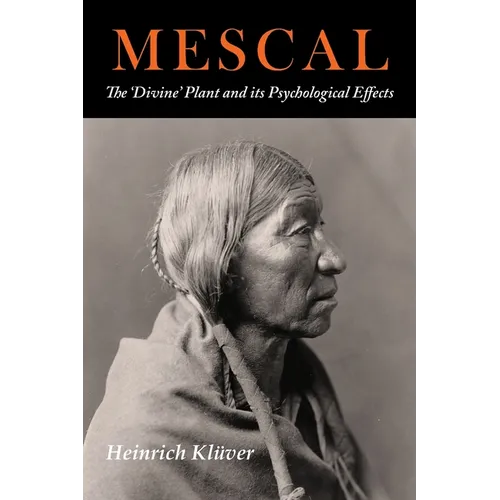
Mescal: The Divine Plant and Its Psychological Effects: The 'Divine' Plant and Its Psychological Effects - Paperback

$17.28 USD
$17.28 USD
Sale Sold out
Shipping calculated at checkout.
In stock (100 units), ready to be shipped

Available Offers

Fast delivery available on most orders

Multiple secure payment options accepted

Secure checkout with
  • American Express
  • Apple Pay
  • Diners Club
  • Discover
  • Google Pay
  • Mastercard
  • PayPal
  • Shop Pay
  • Visa

Flight Range: Up to 1,000 meters (3,280 feet)

Maximum Speed: 45 kilometers per hour (28 miles per hour)

For all orders exceeding a value of 100USD shipping is offered for free.

Returns will be accepted for up to 10 days of Customer’s receipt or tracking number on unworn items. You, as a Customer, are obliged to inform us via email before you return the item.

Otherwise, standard shipping charges apply. Check out our delivery Terms & Conditions for more details.

View Product Details
Shopping cart
Product Product subtotal Quantity Price Product subtotal
Mescal: The Divine Plant and Its Psychological Effects: The 'Divine' Plant and Its Psychological Effects - Paperback
$17.28/ea
$0.00
$17.28/ea $0.00

Product Description

by Heinrich Kluver (Author)

2022 Reprint of the 1928 Edition. Exact facsimile of the original edition and not reproduced with Optical Recognition Software. Mescaline is the principal active psychedelic agent of the peyote and San Pedro cacti, which have been used in Native American religious ceremonies for thousands of years. A German pharmacologist, Arthur Heffter, isolated the alkaloids in the peyote cactus in 1897. This included mescaline, which he showed through a combination of animal and self-experiments was the compound responsible for the psychoactive properties of the plant. In 1919, Ernst Späth, another German chemist, synthesised the drug. Although personal accounts of taking the cactus had been written by psychologists such as Weir Mitchell in the US and Havelock Ellis in the UK during the 1890s, the German-American Heinrich Kluver was the first to systematically study its psychological effects in this small book called Mescal and published in 1928. The book stated that the drug could be used to research the unconscious mind.


Number of Pages: 122
Dimensions: 0.29 x 6 x 4 IN
Publication Date: October 18, 2022
you might like
