


Product Description
by John Faulkner (Author), Trent Watts (Foreword by)
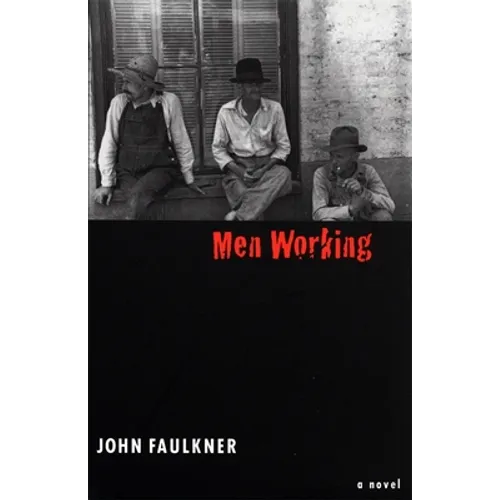
This novel of Mississippi hill country life depicts some of the more troubling and unpublicized aspects of the New Deal by tracing the fortunes of the Taylor family, sharecroppers who move to town to work for the "WP and A," the Works Progress Administration.
John Faulkner, a one-time WPA project engineer, has much to satirize in this broadly comic novel. First and foremost are the Taylors: exasperating and unemployable, they are unaccountably abiding; hopelessly destitute, they place a higher premium on a new radio than on food and shelter. Faulkner also casts a sardonic eye on the town merchants, who extend credit to WPA workers as quickly as they inflate prices, and, of course, on the WPA itself, an agency that entices naive, desperate country folk with the promise of a dole--only to lay them off and then ignore them. In his foreword, Trent Watts establishes the singularity of Men Working while noting in it echoes of Tobacco Road, As I Lay Dying, and The Grapes of Wrath. Watts also identifies in John Faulkner's tone an ambivalence shared by many southerners who witnessed the changes wrought by "progress" upon their traditional way of life.Back Jacket
This novel of Mississippi hill country life depicts some of the more troubling and unpublicized aspects of the New Deal by tracing the fortunes of the Taylor family, sharecroppers who move to town to work for the "WP and A", the Works Progress Administration. John Faulkner, a one-time WPA project engineer, has much to satirize in this broadly comic novel. First and foremost are the Taylors: exasperating and unemployable, they are unaccountably abiding; hopelessly destitute, they place a higher premium on a new radio than on food and shelter. Faulkner also casts a sardonic eye on the town merchants, who extend credit to WPA workers as quickly as they inflate prices, and, of course, on the WPA itself, an agency that entices naive, desperate country folk with the promise of a dole - only to lay them off and then ignore them. In his foreword, Trent Watts establishes the singularity of Men Working while noting in it echoes of Tobacco Road, As I Lay Dying, and The Grapes of Wrath. Watts also identifies in John Faulkner's tone an ambivalence shared by many southerners who witnessed the changes wrought by "progress" upon their traditional way of life.
Author Biography
John Faulkner (1901-1963) was a native and lifetime resident of the Mississippi hill country and Delta region. A writer and accomplished, self-taught painter, he also worked, at various times, as an engineer, airplane pilot, World War II naval officer, and farmer. Of the number of books Faulkner wrote, he is best remembered for the novels "Men Working" and "Dollar Cotton," and the memoir "My Brother Bill," about William Faulkner.



