Skip to content
Welcome To Our Store.
100,000+ Products for Home, Medical, Office & Classroom Needs
Search
Skip to product information
1 of 1

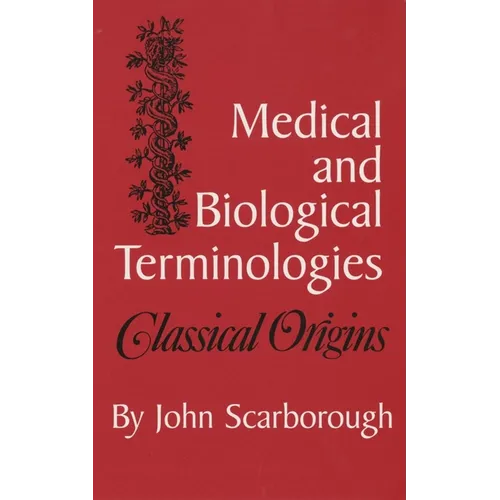
Medical and Biological Terminologies: Classical Origins Volume 13 - Paperback

$53.91 USD
$53.91 USD
Sale Sold out
Shipping calculated at checkout.
In stock (100 units), ready to be shipped

Available Offers

Fast delivery available on most orders

Multiple secure payment options accepted

Secure checkout with
  • American Express
  • Apple Pay
  • Diners Club
  • Discover
  • Google Pay
  • Mastercard
  • PayPal
  • Shop Pay
  • Visa

Flight Range: Up to 1,000 meters (3,280 feet)

Maximum Speed: 45 kilometers per hour (28 miles per hour)

For all orders exceeding a value of 100USD shipping is offered for free.

Returns will be accepted for up to 10 days of Customer’s receipt or tracking number on unworn items. You, as a Customer, are obliged to inform us via email before you return the item.

Otherwise, standard shipping charges apply. Check out our delivery Terms & Conditions for more details.

View Product Details
Shopping cart
Product Product subtotal Quantity Price Product subtotal
Medical and Biological Terminologies: Classical Origins Volume 13 - Paperback
$53.91/ea
$0.00
$53.91/ea $0.00

Product Description

by John Scarborough (Author)

The often opaque and specialized vocabulary that is the language of the medical and biological sciences can be a barrier to students of the medical profession. John Scarborough, in Medical and Biological Terminologies: Classical Origins, takes a fresh approach to this problem, arguing that a knowledge of the historical reasons underlying the choices of words used in these sciences, and of how the meanings of words have changed over the millennia, is far superior to rote memorization.

Beginning with a brief discussion of why jargons are common and necessary, the author proceeds through botany and invertebrate zoology to suggest how living things are classified and related to one another, as well as to demonstrate how Greco-Latinate terms in these fields are important in biomedicine. Scarborough then considers the human body through traditional systematics (bones, nerves, muscles, the respiratory, digestive, reproductive, and vascular systems, endocrines, and the sense organs) to show how nomenclatures for parts and functions reflect the continuous efforts to define the human being.


Number of Pages: 320
Dimensions: 0.94 x 8.52 x 5.43 IN
Publication Date: February 15, 1998
you might like
