Skip to content
Welcome To Our Store.
100,000+ Products for Home, Medical, Office & Classroom Needs
Search
Skip to product information
1 of 1

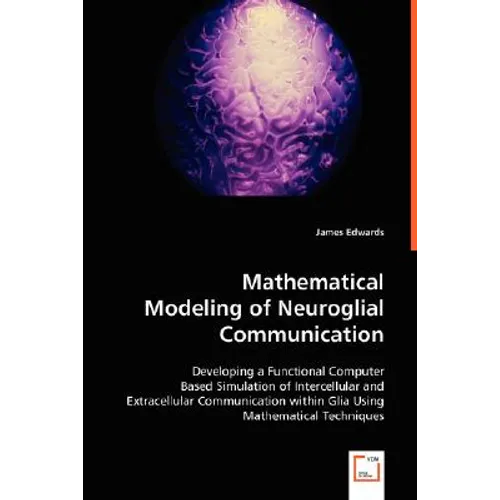
Mathematical Modeling of Neuroglial Communication - Paperback

$76.21 USD
$76.21 USD
Sale Sold out
Shipping calculated at checkout.
In stock (100 units), ready to be shipped

Available Offers

Fastest Delivery Tomorrow With Vip DealOrder within 1 hr 8 mins.

Instant 10% Discount On HDFC Banks Credit/Debit Cards EMI and CreditCard

Secure checkout with
  • American Express
  • Apple Pay
  • Diners Club
  • Discover
  • Google Pay
  • Mastercard
  • PayPal
  • Shop Pay
  • Visa
  • Daily deals
  • Return policy
  • Payment method
  • Help center 24/7

Flight Range: Up to 1,000 meters (3,280 feet)

Maximum Speed: 45 kilometers per hour (28 miles per hour)

For all orders exceeding a value of 100USD shipping is offered for free.

Returns will be accepted for up to 10 days of Customer’s receipt or tracking number on unworn items. You, as a Customer, are obliged to inform us via email before you return the item.

Otherwise, standard shipping charges apply. Check out our delivery Terms & Conditions for more details.

View Product Details
Shopping cart
Product Product subtotal Quantity Price Product subtotal
Mathematical Modeling of Neuroglial Communication - Paperback
$76.21/ea
$0.00
$76.21/ea $0.00

Product Description

by James Edwards (Author)

Mathematical modelling is being used in many areas of the biological sciences to gain a deeper understanding of the complex mechanisms governing the natural world. No field has more to gain from this type of analysis than the most complex object known, the brain. Glia cells coordinate chemical signalling within the brain. There is great varia-tion in how this is performed, with intercellular communication via gap junctions and extracellular communication via diffusion partici-pating to different degrees within different types of glial cells. Using this as a base, this book draws together existing experimental data and theoretical concepts and develops a new mathematical model that incorporates many aspects of this cellular behaviour. The development of the model is tracked as it is contrasted with other models and applied to a real life scenario. The implementation of the equations into a program is considered and simulation results displayed. The application of the model to real problems is empha-sized, though there is consideration of more advanced theoretical concepts for the interested reader.

Number of Pages: 116
Dimensions: 0.24 x 9 x 6 IN
Publication Date: May 19, 2008
you might like