Skip to content
Welcome To Our Store.
100,000+ Products for Home, Medical, Office & Classroom Needs
Search
Skip to product information
1 of 1

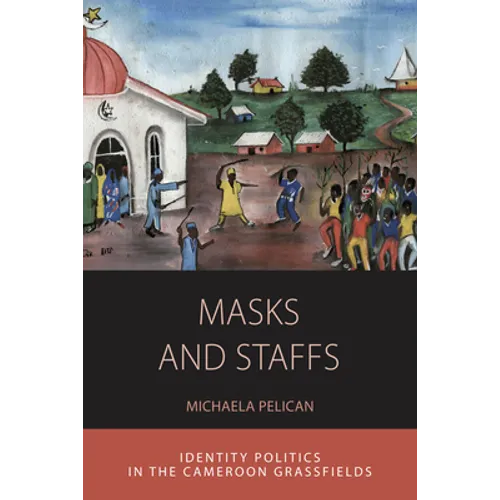
Masks and Staffs: Identity Politics in the Cameroon Grassfields - Paperback

$59.76 USD
$59.76 USD
Sale Sold out
Shipping calculated at checkout.
In stock (100 units), ready to be shipped

Available Offers

Fastest Delivery Tomorrow With Vip DealOrder within 1 hr 8 mins.

Instant 10% Discount On HDFC Banks Credit/Debit Cards EMI and CreditCard

Secure checkout with
  • American Express
  • Apple Pay
  • Diners Club
  • Discover
  • Google Pay
  • Mastercard
  • PayPal
  • Shop Pay
  • Visa

Flight Range: Up to 1,000 meters (3,280 feet)

Maximum Speed: 45 kilometers per hour (28 miles per hour)

For all orders exceeding a value of 100USD shipping is offered for free.

Returns will be accepted for up to 10 days of Customer’s receipt or tracking number on unworn items. You, as a Customer, are obliged to inform us via email before you return the item.

Otherwise, standard shipping charges apply. Check out our delivery Terms & Conditions for more details.

View Product Details
Shopping cart
Product Product subtotal Quantity Price Product subtotal
Masks and Staffs: Identity Politics in the Cameroon Grassfields - Paperback
$59.76/ea
$0.00
$59.76/ea $0.00

Product Description

by Michaela Pelican (Author)

The Cameroon Grassfields, home to three ethnic groups - Grassfields societies, Mbororo, and Hausa - provide a valuable case study for the anthropological examination of identity politics and interethnic relations. In the midst of the political liberalization of Cameroon in the late 1990s and 2000s, local responses to political and legal changes took the form of a series of performative and discursive expressions of ethnicity. Confrontational encounters stimulated by economic and political rivalry, as well as socially integrative processes, transformed collective self-understanding in Cameroon in conjunction with recent global discourses on human, minority, and indigenous rights. The book provides a vital contribution to the study of ethnicity, conflict, and social change in the anthropology of Africa.

Author Biography

Michaela Pelican is Junior Professor of Cultural and Social Anthropology at the University of Cologne. She is also the director of the University of Cologne Forum Ethnicity as a Political Resource: Perspectives from Africa, Latin America, Asia and Europe and a member of the Cologne Global South Studies Center. She is the editor of a special issue, Global African Entrepreneurs (Urban Anthropology 2014, 43), and the author of several articles on indigenous rights movements in Africa.


Number of Pages: 260
Dimensions: 0.55 x 9 x 6 IN
Publication Date: June 01, 2017
you might like
