Product Description
by Federal Highway Administration (Author), U. S. Department of Transportation (Author)
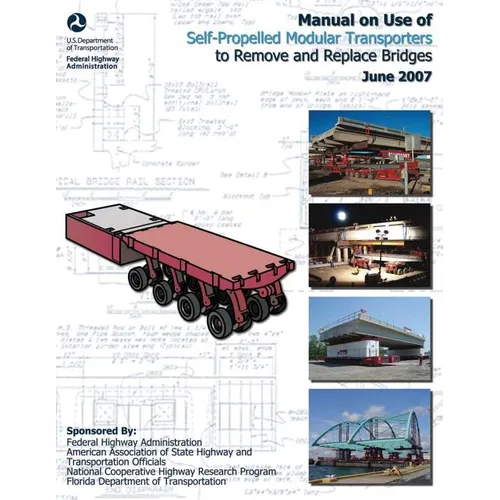
The use of self-propelled modular transporters (SPMTs) for bridge moves was the top implementation recommendation of the 2004 Prefabricated Bridge Elements and Systems International Scan sponsored by the Federal Highway Administration (FHWA), the American Association of State Highway and Transportation Officials (AASHTO), and the Transportation Research Board's National Cooperative Highway Research Program. Prefabrication of bridges offsite under more controlled conditions followed by rapid installation onsite can achieve quality installations in significantly less time than the months or years typically required for conventional bridge construction. The use of SPMTs in combination with prefabrication should be considered for all bridge replacement projects in locations with high traffic volumes. The purpose of the scan was to learn how other countries use prefabricated bridge components to minimize traffic disruption, improve work zone safety, reduce environmental impact, improve constructability, enhance quality, and lower life-cycle costs. The scan team learned that European countries frequently use SPMTs to lift and drive bridges to their final location in just minutes. SPMTs are computer-controlled platform vehicles that can move bridge systems weighing up to several thousand tons with precision to within a fraction of an inch. The prefabrication of bridges offsite under controlled conditions followed by rapid installation onsite can achieve quality installations with traffic impacts of minutes to a few hours compared to the months typically required for conventional onsite bridge construction. The significantly reduced onsite construction time when using SPMTs to move prefabricated bridge superstructures, for example, is due to the collapse of the sequential processes of conventional onsite bridge construction to just one step: moving the prefabricated superstructure from the staging area to its final position. This technology should be considered for all bridge replacement projects where reduced onsite construction time is a priority. The manual provides details from project conception to completion for using SPMTs to remove or install a bridge. It describes equipment, lists benefits and costs, and identifies criteria to determine when this technology is appropriate. It also addresses planning-related issues such as traffic considerations and site requirements. Design issues discussed include temporary shoring and prefabrication requirements, allowable temporary stresses and deflections during the move, and possible design efficiencies because of offsite prefabrication. Contracting issues covered include staging area requirements and contracting strategies for reduced onsite construction time. Using this manual in combination with the FHWA decisionmaking framework and analysis of delayrelated user costs should provide the guidance that bridge owners and other bridge professionals need to understand the technology, determine whether using SPMTs will benefit a specific bridge project, and develop contract documents that incorporate the technology.