


Product Description
by Mihaly Kopanyi (Author), Abdu Muwonge (Author)
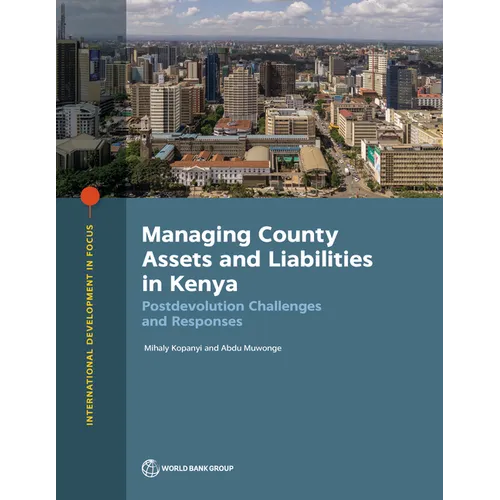
Public entities around the world possess an enormous volume of assets and wealth, which includes land, buildings, historic sites, parks, and infrastructure networks, among many others. Good management of such assets is a catalyst for accelerating development and expanding services; poor asset management generates enormous losses, including lost opportunities to build wealth. Private enterprises increasingly use computerized systems to manage assets such as fleets and buildings. Many city leaders in developing countries, however, are unaware of asset management or feel they lack the time or money to undertake it. Managing County Assets and Liabilities in Kenya: Postdevolution Challenges and Responses can help them begin or maintain their efforts to manage assets sustainably. This book helps readers understand the basic concept of asset management; explains systems, tools, and procedures; and provides models and guidance. Kenya has achieved much since its 2013 devolution of governance and management to new counties. However, counties, which are the local governments in Kenya, are still working toward establishing systems and procedures, creating asset and liability registers, verifying and valuing assets, using assets strategically, and resolving disputes surrounding inherited assets and liabilities. This book provides glimpses into the Kenyan devolution process and asset transfer challenges, draws lessons, and explores options relevant to both Kenya and other nations. Ample studies discuss various aspects of municipal asset management, such as managing infrastructure, fixed assets, water services, building properties, roads, or fleets. This book is unique among asset management studies in three ways: it discusses all sorts of assets and liabilities and their interlinkages, exemplifies the close connection between financial results and asset management of municipalities, and reveals the political economy challenges in transferring assets and liabilities across public entities.
Author Biography
The World Bank came into formal existence in 1945 following the international ratification of the Bretton Woods agreements. It is a vital source of financial and technical assistance to developing countries around the world. The organization's activities are focused on education, health, agriculture and rural development, environmental protection, establishing and enforcing regulations, infrastructure development, governance and legal institutions development. The World Bank is made up of two unique development institutions owned by its 185 Member Countries. The International Bank for Reconstruction and Development (IBRD) focuses on middle income and creditworthy poor countries and the International Development Association (IDA), which focuses on the poorest countries in the world.