


Product Description
by Malinda Maynor Lowery (Author)
With more than 50,000 enrolled members, North Carolina's Lumbee Indians are the largest Native American tribe east of the Mississippi River. Malinda Maynor Lowery, a Lumbee herself, describes how, between Reconstruction and the 1950s, the Lumbee crafted and maintained a distinct identity in an era defined by racial segregation in the South and paternalistic policies for Indians throughout the nation. They did so against the backdrop of some of the central issues in American history, including race, class, politics, and citizenship.
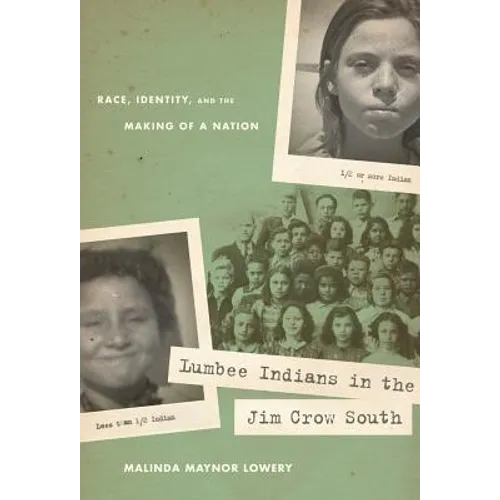
Lowery argues that "Indian" is a dynamic identity that, for outsiders, sometimes hinged on the presence of "Indian blood" (for federal New Deal policy makers) and sometimes on the absence of "black blood" (for southern white segregationists). Lumbee people themselves have constructed their identity in layers that tie together kin and place, race and class, tribe and nation; however, Indians have not always agreed on how to weave this fabric into a whole. Using photographs, letters, genealogy, federal and state records, and first-person family history, Lowery narrates this compelling conversation between insiders and outsiders, demonstrating how the Lumbee People challenged the boundaries of Indian, southern, and American identities.
Front Jacket
With more than 50,000 enrolled members, North Carolina's Lumbee Indians are the largest Native American tribe east of the Mississippi River. Malinda Maynor Lowery, a Lumbee herself, describes how, between Reconstruction and the 1950s, the Lumbee crafted and maintained a distinct identity in an era defined by racial segregation in the South and paternalistic policies for Indians throughout the nation. They did so against the backdrop of some of the central issues in American history, including race, class, politics, and citizenship.
With more than 50,000 enrolled members, North Carolina's Lumbee Indians are the largest Native American tribe east of the Mississippi River. Malinda Maynor Lowery, a Lumbee herself, describes how, between Reconstruction and the 1950s, the Lumbee crafted and maintained a distinct identity in an era defined by racial segregation in the South and paternalistic policies for Indians throughout the nation. They did so against the backdrop of some of the central issues in American history, including race, class, politics, and citizenship.



