


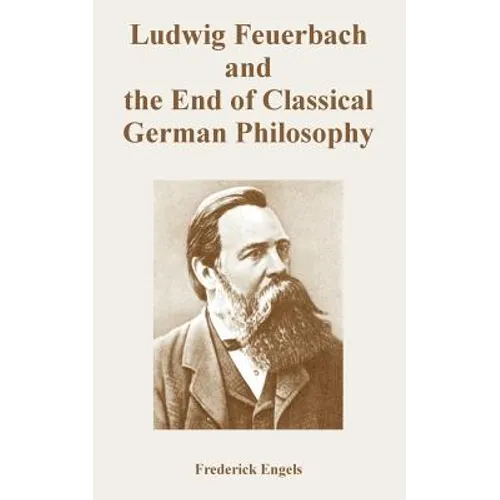
Product Description
by Frederick Engels (Author)
The present work carries us back to a period which, although chronologically no more than a generation or so behind us, has become as foreign to the present generation in Germany as if it were already a full hundred years old. Yet it was the period of Germany's preparation for the Revolution of 1848; and all that has happened in our country since then has been merely a continuation of 1848, merely the execution of the last will and testament of the revolution. Just as in France in the eighteenth century, so in Germany in the nineteenth, a philosophical revolution ushered in the political collapse. But with what a difference The French were in open combat with all official science, with the church and often also the state; their writings were printed beyond the frontier, in Holland or England, while they themselves were often on the point of landing in the Bastille. But the Germans were professors, state-appointed instructors of youth; their writings were recognized textbooks, and the system rounding off the whole development---the Hegelian system---was even raised, in some degree, to the rank of a royal Prussian philosophy of state Was it possible that a revolution could hide behind these professors, behind their pedantically obscure phrases, their ponderous, wearisome sentences? Were not the liberals, the very people who then passed as the representatives of the revolution, the bitterest opponents of this brain-befuddling philosophy? But what neither governments nor liberals saw was seen by at least one man as early as 1833, and indeed by a man called Heinrich Heine.



