Skip to content
Save 5% on your next order with code PREMIUM5!
100,000+ Products for Home, Medical, Office & Classroom Needs
Search
Skip to product information
1 of 1

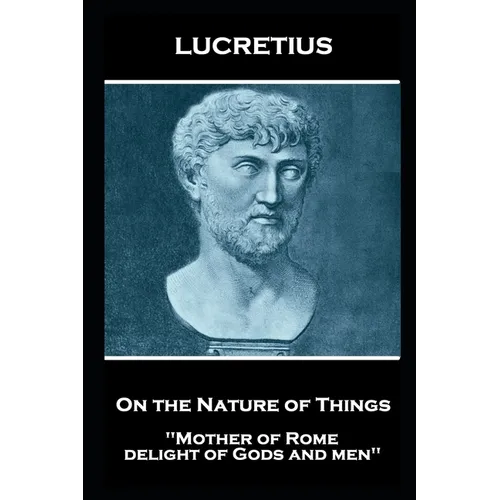
Lucretius - On the Nature of Things: "Mother of Rome, delight of Gods and men'' - Paperback

$17.87 USD
$17.87 USD
Sale Sold out
Shipping calculated at checkout.
In stock (100 units), ready to be shipped

Available Offers

Fast delivery available on most orders

Multiple secure payment options accepted

Secure checkout with
  • American Express
  • Apple Pay
  • Diners Club
  • Discover
  • Google Pay
  • Mastercard
  • PayPal
  • Shop Pay
  • Visa

Flight Range: Up to 1,000 meters (3,280 feet)

Maximum Speed: 45 kilometers per hour (28 miles per hour)

For all orders exceeding a value of 100USD shipping is offered for free.

Returns will be accepted for up to 10 days of Customer’s receipt or tracking number on unworn items. You, as a Customer, are obliged to inform us via email before you return the item.

Otherwise, standard shipping charges apply. Check out our delivery Terms & Conditions for more details.

View Product Details
Shopping cart
Product Product subtotal Quantity Price Product subtotal
Lucretius - On the Nature of Things: "Mother of Rome, delight of Gods and men'' - Paperback
$17.87/ea
$0.00
$17.87/ea $0.00

Product Description

by Lucretius (Author)

The Roman poet and philosopher Titus Lucretius Carus better known as Lucretius was born in approximately 99 BCE. Much of the events in his life are unknown.

What is known is that is is the author of one of the great classics of poetry. The epic didactic poem in hexameters, On the Nature of Things (De Rerum Natura). Within its six books Lucretius makes a bold sweep through the scientific theories of the Greek philosopher Epicurus in poetic form to give man a firm base from which to attain a peace and stability from all of the competing elements in society, life and the heavens.

The poem was a significant influence on the Latin Augustan poets, particularly Virgil (in his Aeneid and Georgics) and Horace. With the fall of the Empire the work disappeared. It was only in 1417 that a copy was re-discovered in a monastery in Germany and it once more became an important influence, this time in the Enlightenment era.

In its scope and breadth it achieves much, both as a purveyor of scientific principles but also as a majestic poetry classic.


Number of Pages: 210
Dimensions: 0.44 x 9 x 6 IN
Publication Date: October 12, 2020
you might like
