


Product Description
by Burke Calum (Author)
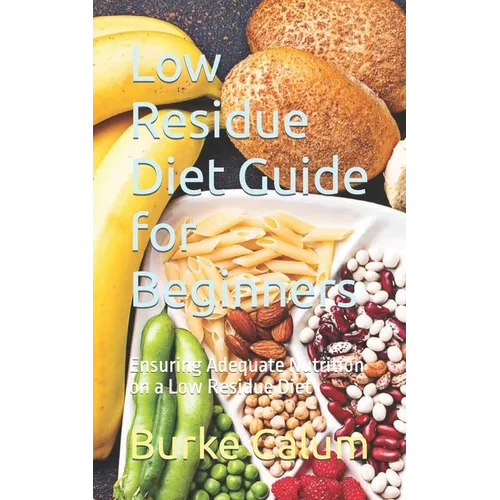
Low Residue Diet Guide for Beginners
The concept of "residue in foods" forms the crux of understanding a low residue diet. Residue refers to undigested or partially digested food material that moves through the digestive tract and ultimately contributes to stool bulk. This undigested matter includes fiber, particularly insoluble fiber, as well as some other components like certain complex carbohydrates and plant matter.In essence, a low residue diet is specifically designed to minimize the amount and bulk of this undigested material passing through the gastrointestinal system. This reduction in residue helps to decrease the frequency and volume of bowel movements, which can be beneficial for individuals with certain digestive conditions or those recovering from certain medical procedures, such as surgeries involving the gastrointestinal tract.
Foods high in residue typically include whole grains, seeds, nuts, raw fruits, and vegetables. These foods contain significant amounts of fiber, which adds bulk to stool and promotes regular bowel movements. While fiber is generally beneficial for digestive health, in certain situations, reducing its intake becomes necessary to manage symptoms such as diarrhea, abdominal pain, inflammation.
Understanding the impact of residue in foods involves recognizing that not all fibers are created equal. There are two main types of dietary fiber: soluble and insoluble. Soluble fiber dissolves in water and forms a gel-like substance, slowing down digestion and absorption of nutrients. Insoluble fiber, on the other hand, does not dissolve in water and adds bulk to stool.
A low residue diet typically limits both types of fiber, aiming to reduce the overall fiber content in the diet. TO CONTINUE READING, GRAB YOUR COPY NOW!!!
Number of Pages: 104
Dimensions: 0.22 x 8 x 5 IN
Publication Date: November 18, 2023