Product Description
by U. S. Air Force (Author), Office of Air Force History (Author)
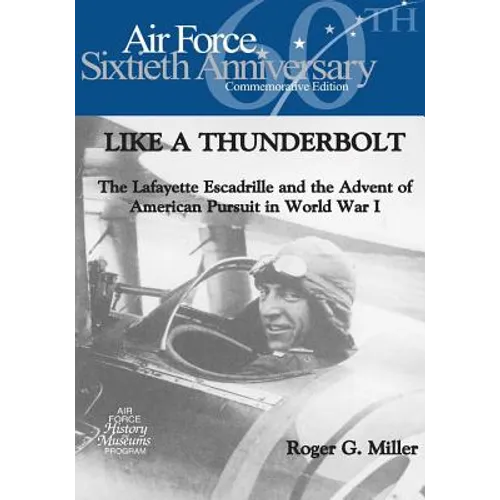
The advent of an American squadron, or "escadrille," within the French air force, the Service A ronautique, had been far from a simple process. French leaders initially held the belief, common at the time, that the war begun in 1914 would be a short one. The potential value of American volunteers fighting for France both for propaganda purposes and for helping bring the power of the New World into the war on the side of the Allies was thus irrelevant at first. By early 1915, however, the French began to accept American volunteers and assign them toescadrilles. In early 1916, the Service A ronautique united several of these men in an elite chasse unit, which quickly earned an enviable reputation for audacity, bravery, and lan.Success of this unit, the Lafayette Escadrille, had three consequences. First, its existence encouraged a large number of Americans, far more than needed in one escadrille, to volunteer for French aviation. These individuals, identified unofficially as members of a "Lafayette Flying Corps," served in numerous French air units. Second, the publicity surrounding the Lafayette Escadrille contributed favorable press for the Allied cause, strengthened ties between France and the U.S., and ultimately helped prepare the U.S. to participate on the Allied side of the conflict. Third, the existence of a large body of experienced American pilots provided combat veterans for the Air Service of the American Expeditionary Forces (AEF) in France when the U.S. ultimately entered the war. These veterans helped instill in the U.S. Air Service the attitudes and practices of the Service A ronautique, an infusion especially reflected in two U.S. pursuit squadrons, the 103rd Aero Squadron, made up of Lafayette Escadrille pilots, and the 94th AeroSquadron, the most famous American combat squadron of the war. Further, this body of veterans influenced all U.S. pursuit units as Lafayette personnel spread throughout the Air Service.This was not the whole story, though. In early 1918, two pursuit units, the 27th and 147th Aero Squadrons, joined with the 94th and 95th Aero Squadrons to form the 1st Pursuit Group, the U.S. Air Service's first and most famous combat groupand forerunner of the U.S. Air Force's present-day wings. These, however, were British-trained squadrons commanded by Royal Flying Corps (RFC) veterans, and they contributed a British ethos to the American pursuit force, an ethos characterized by emphasis on the offensive at all hazards. Finally, and perhaps most important, the U.S. Army officers who created and commanded the U.S. Air Service had their own shared identity and sense of professionalism, that of the regular U.S. Army and of the Military Academy at West Point.By late 1918, the Air Service in France had begun to develop its own leaders who, whether imbued with the attributes of the French, British, or American systems, or a combination thereof, brought their own standards and practices toAmerican pursuit. Perhaps no one epitomized this contribution more than the eventual U.S. ace-of aces, Edward V. "Eddie" Rickenbacker. The final result in the early 1920s was a distinctly American fighter force with a special sense of identity.