Product Description
by Aminah McCloud (Author)
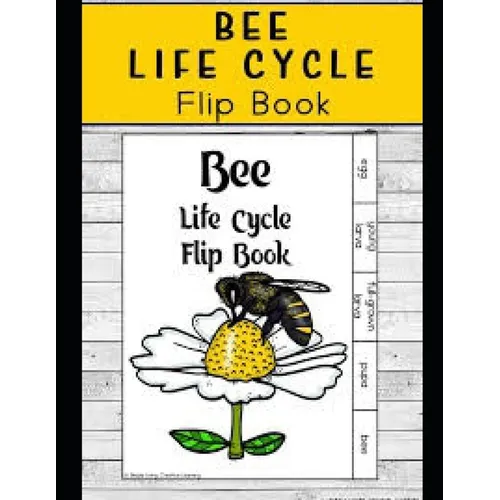
The egg, larva, pupal, and adult phases of the honey bee life cycle are separated into these four categories. Initial Stage: The Egg Stage The only bee capable of producing between 2,000 and 3,000 eggs in a single day is the queen bee. By the third day, the egg has shifted to an upright position before falling. In addition to fertilised eggs, the queen bee also lays unfertilized eggs. Queen bees or female bees develop from the fertilised egg. Male bees, sometimes known as drone bees, are created when the unfertilized egg hatches. Phase 2: The Larval Phase Three days after the egg turns into a larva and six days after the egg is deposited in the beehive, a worker bee may be distinguished from the queen bee. During their first three days as larvae, the "royal jelly" is provided to all the larvae, including the female bees, the workers, and the drone bees. During this phase, the larva sheds its skin several times. The female larvae, which develop into a queen bee, are the only ones afterwards given royal jelly. To protect and aid in the larvae's development into a pupa, the worker bees seal the top of the cell with beeswax. Phase 3, known as the pupal stage, is when the bee has acquired wings, eyes, legs, and little body hair, giving it a look that is very similar to that of an adult bee. The emerging adult bee chews its way out of the closed-cell after the pupa has reached adulthood in stage four. From the egg stage until adulthood, the queen bee takes 16 days. Drone bees grow into adult bees in 24 days, whereas worker bees need 18 to 22 days to reach full development. Conclusion The pollination process is mostly made possible by honey bees. When pollinating, honey bees may fly at a speed of around 20 mph, while returning to the beehive with nectar they have collected at a speed of about 17 mph. The pollination process is more effective and efficient as a whole because of this precise reason. One of the tastiest dietary ingredients, bee, wouldn't be available to us for a very long time without honey bees sharing pollen.