Product Description
by Don T. Phillips (Author), J. T. Black (Author)
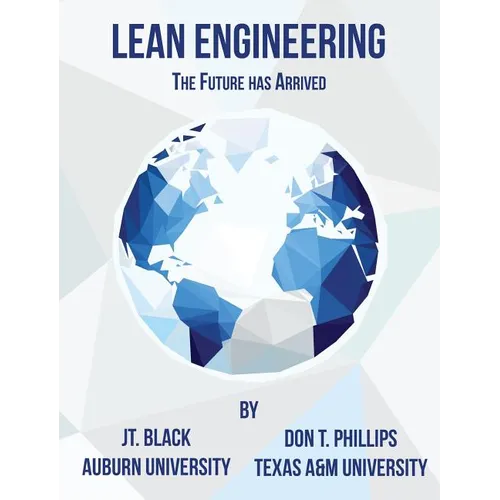
Modern Manufacturing Methodologies have undergone three different evolutionary stages over the past 200 years. Before there were modern manufacturing plants, the world only knew skilled craftsmen who labored as individuals in very small groups to produce goods and services. The first factory evolution came about when James Watt invented the steam engine. Metal cutting, forming and assembly machines were co-located near streams or rivers forming what we now call the Job Shop or the American Armory System. The second factory evolution began when Henry Ford introduced the first modern assembly line using interchangeable parts and standardized manufacturing procedures. This gave rise to the modern flow shop, which reached its zenith during WWII. In the late 1970s, the third industrial evolution began when Taiichi Ohno and the Toyota Motor Company introduced what we now call Lean Manufacturing...and the world came. Over the last 40 years, all forms of manufacturing and service systems have embraced the concepts of Lean Thinking and proved its superiority to traditional manufacturing and service systems design. This book defines and characterizes a new breed of Manufacturing Engineer which we call the Lean Engineer. The Lean Engineer has roots in traditional Industrial engineering, but is also well trained in six-sigma methodologies and understands lean to green factory design principles. However, Lean Engineering transcends and redefines the classic Industrial engineer. Principles of Lean systems design, U-shaped Lean manufacturing cells, Linked Cell Manufacturing System design and Mixed Model final assembly lines are unique Lean Engineering strategies. This book attempts to define for the first time a new manufacturing engineering discipline called the Lean Engineer. This book: - Introduces Lean System Design principles - Demonstrates the conversion of traditional manufacturing lines into U-shaped Lean Cells - Contrasts push versus pull manufacturing strategies - Covers Balancing, Leveling and System synchronization - Demonstrates Value Stream Mapping and the 7-Lean analysis tools - Provides an introduction to Queuing Network Analysis for single and multiple product flows ....and many more Principles which define the Lean Engineer