Skip to content
Welcome To Our Store.
100,000+ Products for Home, Medical, Office & Classroom Needs
Search
Skip to product information
1 of 2

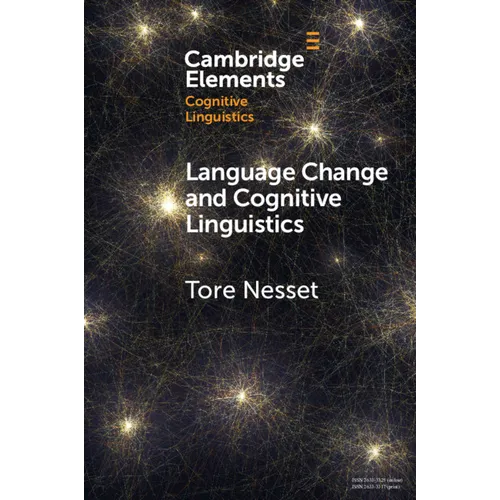
Language Change and Cognitive Linguistics - Paperback

$38.25 USD
$38.25 USD
Sale Sold out
Shipping calculated at checkout.
In stock (100 units), ready to be shipped

Available Offers

Fast delivery available on most orders

Multiple secure payment options accepted

Secure checkout with
  • American Express
  • Apple Pay
  • Diners Club
  • Discover
  • Google Pay
  • Mastercard
  • PayPal
  • Shop Pay
  • Visa

Flight Range: Up to 1,000 meters (3,280 feet)

Maximum Speed: 45 kilometers per hour (28 miles per hour)

For all orders exceeding a value of 100USD shipping is offered for free.

Returns will be accepted for up to 10 days of Customer’s receipt or tracking number on unworn items. You, as a Customer, are obliged to inform us via email before you return the item.

Otherwise, standard shipping charges apply. Check out our delivery Terms & Conditions for more details.

View Product Details
Shopping cart
Product Product subtotal Quantity Price Product subtotal
Language Change and Cognitive Linguistics - Paperback
$38.25/ea
$0.00
$38.25/ea $0.00

Product Description

by Tore Nesset (Author)

The purpose of this Cambridge Element is to bring together three subfields of the language sciences: cognitive, historical (diachronic), and Russian linguistics. Although diachrony has inspired a number of important works in recent years, historical linguistics is still underrepresented in cognitive linguistics, and the most influential publications mainly concern the history of English. This is an unfortunate bias, especially since its lack of morphological complexity makes English a typologically unusual language. In this Cambridge Element, the author demonstrates that Russian has a lot to offer the historically oriented cognitive linguist, given its well-documented history and complex phonology and morpho-syntax. Through seven case studies the author illustrates the relevance of four basic tenets of Cognitive Grammar: the cognitive, semiotic, network, and usage-based commitments.


Number of Pages: 88
Dimensions: 0.18 x 9 x 6 IN
Publication Date: December 01, 2022
you might like
