Skip to content
Welcome To Our Store.
100,000+ Products for Home, Medical, Office & Classroom Needs
Search
Skip to product information
1 of 1

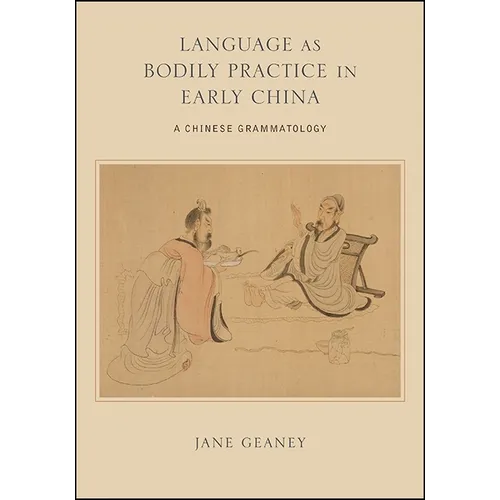
Language as Bodily Practice in Early China: A Chinese Grammatology - Paperback

$66.60 USD
$66.60 USD
Sale Sold out
Shipping calculated at checkout.
In stock (100 units), ready to be shipped

Available Offers

Fastest Delivery Tomorrow With Vip DealOrder within 1 hr 8 mins.

Instant 10% Discount On HDFC Banks Credit/Debit Cards EMI and CreditCard

Secure checkout with
  • American Express
  • Apple Pay
  • Diners Club
  • Discover
  • Google Pay
  • Mastercard
  • PayPal
  • Shop Pay
  • Visa

Flight Range: Up to 1,000 meters (3,280 feet)

Maximum Speed: 45 kilometers per hour (28 miles per hour)

For all orders exceeding a value of 100USD shipping is offered for free.

Returns will be accepted for up to 10 days of Customer’s receipt or tracking number on unworn items. You, as a Customer, are obliged to inform us via email before you return the item.

Otherwise, standard shipping charges apply. Check out our delivery Terms & Conditions for more details.

View Product Details
Shopping cart
Product Product subtotal Quantity Price Product subtotal
Language as Bodily Practice in Early China: A Chinese Grammatology - Paperback
$66.60/ea
$0.00
$66.60/ea $0.00

Product Description

by Jane Geaney (Author)

Challenges the idea held by many prominent twentieth-century Sinologists that early China experienced a "language crisis."

Jane Geaney argues that early Chinese conceptions of speech and naming cannot be properly understood if viewed through the dominant Western philosophical tradition in which language is framed through dualisms that are based on hierarchies of speech and writing, such as reality/appearance and one/many. Instead, early Chinese texts repeatedly create pairings of sounds and various visible things. This aural/visual polarity suggests that texts from early China treat speech as a bodily practice that is not detachable from its use in everyday experience. Firmly grounded in ideas about bodies from the early texts themselves, Geaney's interpretation offers new insights into three key themes in these texts: the notion of speakers' intentions (yi), the physical process of emulating exemplary people, and Confucius's proposal to rectify names (zhengming).

Author Biography

Jane Geaney is Professor of Religious Studies at the University of Richmond and the author of On the Epistemology of the Senses in Early Chinese Thought.


Number of Pages: 350
Dimensions: 0.9 x 9.9 x 6.9 IN
Publication Date: January 02, 2019
you might like
