Product Description
by Charles River (Author)
*Includes pictures
*Includes ancient accounts of Lagash
*Includes online resources and a bibliography for further reading
In southern Iraq, a crushing silence hangs over the dunes. For nearly 5,000 years, the sands of the Iraqi desert have held the remains of the oldest known civilization: the Sumerians. When American archaeologists discovered a collection of cuneiform tablets in Iraq in the late 19th century, they were confronted with a language and a people who were at the time only scarcely known to even the most knowledgeable scholars of ancient Mesopotamia. The exploits and achievements of other Mesopotamian peoples, such as the Assyrians and Babylonians, were already known to a large segment of the population through the Old Testament and the nascent field of Near Eastern studies had unraveled the enigma of the Akkadian language that was widely used throughout the region in ancient times, but the discovery of the Sumerian tablets brought to light the existence of the Sumerian culture, which was the oldest of all the Mesopotamian cultures.
For a people so great it is unfortunate that their accomplishments and contributions, not only to Mesopotamian civilization but to civilization in general, largely go unnoticed by the majority of the public. Perhaps the Sumerians were victims of their own success; they gradually entered the historical record, established a fine civilization, and then slowly submerged into the cultural patchwork of their surroundings. They also never suffered a great and sudden collapse like other peoples of the ancient Near East, such as the Hittites, Assyrians and Neo-Babylonians did. A close examination of Sumerian culture and chronology reveals that the Sumerians set the cultural tone in Mesopotamia for several centuries in the realms of politics/governments, arts, literature, and religion. The Sumerians were truly a great people whose legacy continued long after they were gone.
The ruined Sumerian city of Lagash is located 15 miles east of present-day Shatra in the province of Nasiriya in southern Iraq. Also known as Tell al-Hiba, this was one of the largest urban sites in the ancient lands of southern Mesopotamia; at its height in the Early Dynastic period, the city is believed to have to occupied a total area of approximately 600 hectares. Based on the presence of so many temples, Lagash clearly served as the religious capital of the state. It is from the huge corpus of documents that have been recovered from the city ruins that historians so much about the ancient gods and goddesses that were worshiped by the ancient Sumerians. The temple architecture in the city is amongst the finest found in any of the ancient settlements in Mesopotamia.
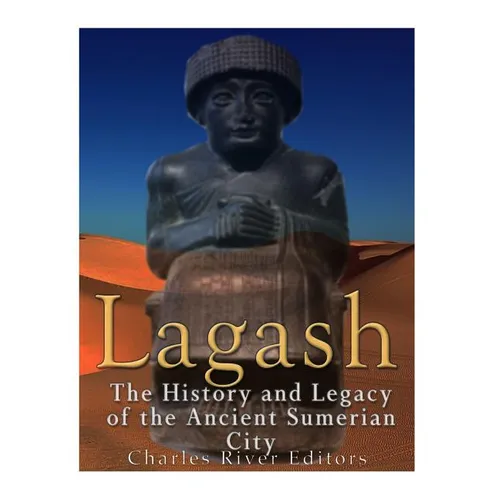
Lagash experienced a Golden Age of prosperity and growth in the early 21st century BCE during the reign of Gudea, a contemporary of Urnammu, the founder of the Third Dynasty of Ur. It is no wonder that Gudea was worshipped as a god. Although Gudea was a fine ruler, after his reign ended the city quickly succumbed to invasion, and over time faded out of popular knowledge. It is only because of excavations carried out there from the 1950s onwards that the questions regarding this site's identity have been answered.
Lagash: The History and Legacy of the Ancient Sumerian City looks at the remarkable site and its impact on the region. Along with pictures depicting important people, places, and events, you will learn about Lagash like never before.