


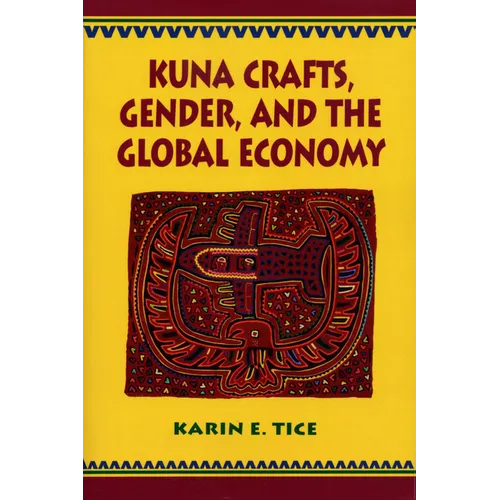
Product Description
by Karin E. Tice (Author)
Brightly colored and intricately designed, molas have become popular with buyers across the United States, Europe, and Japan, many of whom have never heard of the San Blas Kuna of Panama who make the fabric pictures that adorn the clothing, wall hangings, and other goods we buy. In this study, Karin Tice explores the impact of the commercialization of mola production on Kuna society, one of the most important, yet least studied, social changes to occur in San Blas in this century. She argues that far from being a cohesive force, commercialization has resulted in social differentiation between the genders and among Kuna women residing in different parts of the region. She also situates this political economic history within a larger global context of international trade, political intrigue, and ethnic tourism to offer insights concerning commercial craft production that apply far beyond the Kuna case. These findings, based on extensive ethnographic field research, constitute important reading for scholars and students of anthropology, women's studies, and economics. They also offer an indigenous perspective on the twentieth-century version of Columbus's landing--the arrival of a cruise ship bearing wealthy, souvenir-seeking tourists.
Back Jacket
In this study, Karin Tice explores the impact of the commercialization of mola production on Kuna society, one of the most important, yet least studied, social changes to occur in San Blas in this century. She argues that the intersection of class, gender, and ethnicity is historically specific, changes over time, and defines Kuna women's and men's relationships, to the global economy and to political forces at work within that context.
Author Biography
Karin E. Tice holds a Ph.D in anthropology from Columbia University.



