Skip to content
Welcome To Our Store.
100,000+ Products for Home, Medical, Office & Classroom Needs
Search
Skip to product information
1 of 2

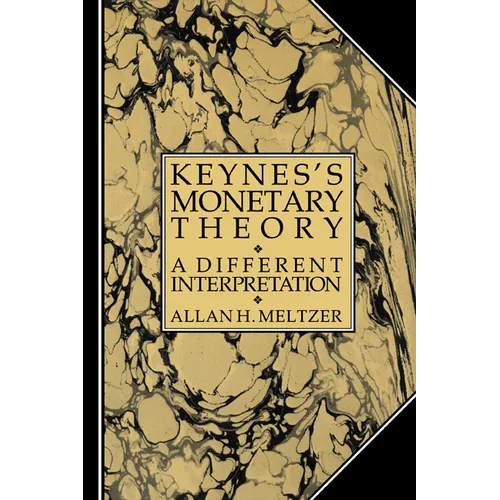
Keynes's Monetary Theory: A Different Interpretation - Paperback

$107.10 USD
$107.10 USD
Sale Sold out
Shipping calculated at checkout.
In stock (100 units), ready to be shipped

Available Offers

Fast delivery available on most orders

Multiple secure payment options accepted

Secure checkout with
  • American Express
  • Apple Pay
  • Diners Club
  • Discover
  • Google Pay
  • Mastercard
  • PayPal
  • Shop Pay
  • Visa

Flight Range: Up to 1,000 meters (3,280 feet)

Maximum Speed: 45 kilometers per hour (28 miles per hour)

For all orders exceeding a value of 100USD shipping is offered for free.

Returns will be accepted for up to 10 days of Customer’s receipt or tracking number on unworn items. You, as a Customer, are obliged to inform us via email before you return the item.

Otherwise, standard shipping charges apply. Check out our delivery Terms & Conditions for more details.

View Product Details
Shopping cart
Product Product subtotal Quantity Price Product subtotal
Keynes's Monetary Theory: A Different Interpretation - Paperback
$107.10/ea
$0.00
$107.10/ea $0.00

Product Description

by Allan H. Meltzer (Author)

In this rigorous study of John Maynard Keynes's views on economic theory and policy from 1920-1946, Professor Meltzer argues that some of Keynes's main ideas have been ignored or misstated. While attention has focused on short-term countercyclical policies, the main policy implications have been neglected. Keynes placed great emphasis on rules, predictability, and reduction of uncertainty. In keeping with his theoretical work, he opposed discretionary fiscal changes and favored rules to reduce instability and increase the capital stock. These policies are consistent with, and provide evidence for, the interpretation of Keynes's theory developed here.

Number of Pages: 356
Dimensions: 0.79 x 9 x 6 IN
Publication Date: November 03, 2005
you might like