


Product Description
by Charles River (Author)
*Includes pictures.
*Includes a bibliography for further reading.
Kaiser Friedrich Wilhelm II, who occupied the throne of the German Empire for more than 30 years from June 1888-November 1918, remains as much an enigma in death as he was in life. Over 70 years after his death in 1941, the mention of his name still sparks unsettled debates among historians. Was he the duty-bound, hands-on leader and passionate pro-British reformer who ruled in challenging times, seemingly mild by comparison with Hitler? Or was he an inept, mentally imbalanced and reckless seeker of attention? Was he even possibly a tragic hero that could only fail at his task given the complexities of his age? At the core of such diverse opinions are the contradictory assumptions found within the vast amount of scholarship that exists on the emperor and his era. On one point, however, there is agreement: his influence on imperial Germany was enormous.
The earliest writings on Wilhelm II tended to treat him either bitterly as the most hated man in Europe and an out-of-touch autocrat who mismanaged his government and left the world embroiled in the greatest war it had ever seen, or as a respectful and loyal servant of the state and faithful husband. But in the past 50 years, historiography has favored a dispassionate approach that has transcended the earlier writings' depiction of the Kaiser either slavishly or as the cause of the age's tribulations. This dispassionate trend in scholarship originated with a seminar on "Kaiser Wilhelm II as a Cultural Phenomenon", given in 1977 at the University of Freiburg by Professor John R hl and based on his discovery of new archival materials. Two years later, R hl and others met in Corfu and presented a series of pioneering studies about the influence of the Kaiser on German politics. R hl believed he found in Wilhelm II the key to understanding the recklessness and downfall of Imperial Germany. The Kaiser, according to R hl's theory, promoted the policies of naval and colonial expansion so extensively that they inevitably caused a sharp deterioration in British relations before 1914.
Given that he was a longstanding emperor of one of World War I's major combatants, it seems odd that it would take 50 years of research to come to the conclusion that the Kaiser played a major role in the march to war. But the early exculpatory research also had its arguments. In 1919, German diplomat Bernhard von B low removed from German archives any documents that might support the view that Germany was responsible for the war, so only documents which lessened Germany's role in bringing about World War I could be seen by researchers. From 1923-1927, the German Foreign Ministry published dozens of volumes from the archives and carefully edited them to make it appear that the war was the result of a breakdown of international relations. Holger Herwig has concluded that most if not all research on Germany's role in the First World War prior to Fritz Fischer's book Griff nach der Weltmacht is little more than an ideologically-driven "sham".
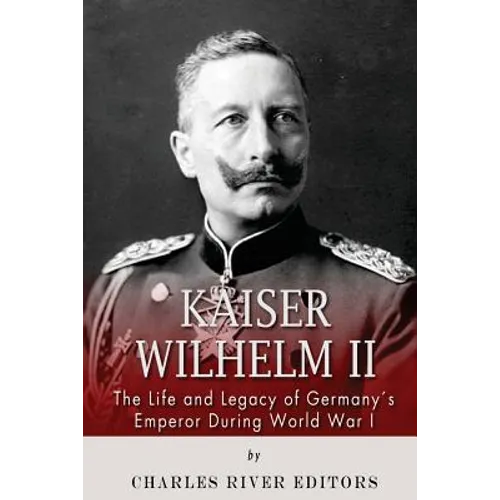
Kaiser Wilhelm II: The Life and Legacy of Germany's Emperor during World War I examines the life of one of the 20th century's most important rulers, and the debates over his legacy. Along with pictures of important people, places, and events, you will learn about Germany's most famous Kaiser like you never have before.
Number of Pages: 42
Dimensions: 0.09 x 9 x 6 IN
Publication Date: November 17, 2013



