


Product Description
by Christopher Preble (Author)
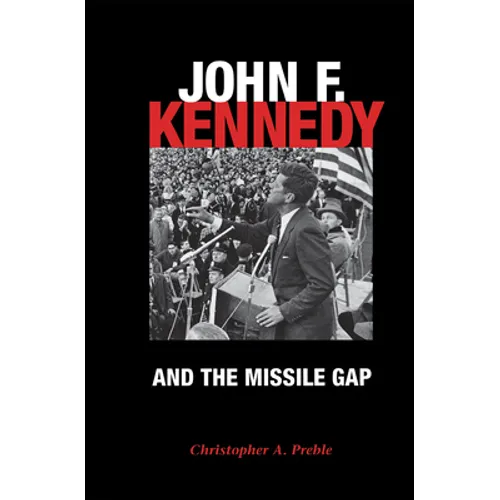
John F. Kennedy owed his victorious bid for the presidency--as well as his success in reversing former president Dwight D. Eisenhower's military and economic policies while in office--largely to his ability to exploit fears of an alleged Soviet strategic superiority, famously known as the "missile gap." Capitalizing on American alarms about national security, within months after his inauguration, he won Congressional authorization for two supplemental defense appropriations that collectively increased the defense budget by more than 15 percent. Yet, argues Christopher Preble, the missile gap was a myth. The Kennedy administration perpetuated that myth to justify a massive military buildup that had profound implications for both the domestic economy and for American foreign relations.
Eisenhower had warned against excessive military spending, but the missile gap scare shook the confidence of millions of Americans. In the face of presumed Soviet dominance, Eisenhower's New Look programs no longer appeared adequate. By electing Kennedy, U.S. citizens signaled their willingness to bear any burden in exchange for peace of mind. Little did they realize that Kennedy's new military strategy, known as Flexible Response, marked a commitment to a war economy that persisted through the final days of the Cold War.
The myth of the missile gap and the policies that followed had a profound impact on U.S.-Soviet relations. But by inducing doubts about America's capacity for world leadership, it also weakened the resolve of the nation's allies. On the home front and in the international arena, the missile gap shaped the outcome of the Cold War.
Author Biography
Christopher A. Preble is Director of Foreign Policy Studies at the Cato Institute. He holds a Ph.D. in History from Temple University.



