


Product Description
by Izabela Leao (Author), Mansur Ahmed (Author), Anuja Kar (Author)
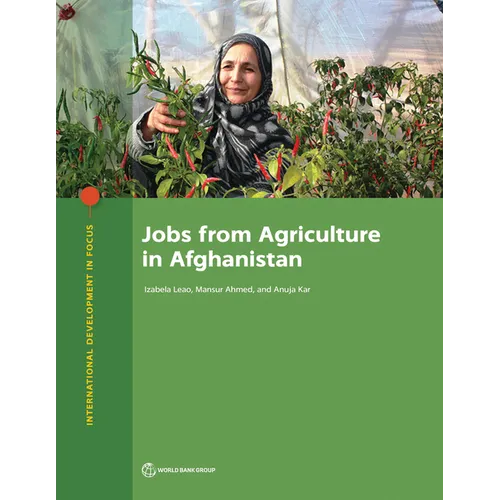
The agriculture sector can play an important role in poverty reduction and sustained growth in Afghanistan, primarily through job creation, improved productivity, and inclusiveness. Using an 'agricultural jobs lens' and multidimensional approach, this report explores the sector's direct and indirect roles in explaining the dynamics of rural employment. The report critically examines three dimensions. First, it evaluates the current jobs structure in rural areas and finds that rural jobs are concentrated in cereal agriculture, especially in wheat, which reflects why the returns from jobs in agriculture are low in Afghanistan. Second, it analyzes the inclusive nature of agriculture jobs for vulnerable groups such as women, youth, those who are landless, and the bottom 40 percent of income earners. The analysis finds that although agriculture jobs are inclusive, many women and youth participate as voluntary family workers because they are unable to access markets and/or find paid jobs in the nonfarm sector. Third, the report evaluates the role of public and private sector interventions in supporting job creation in agriculture. It was argued that interventions can work and that there is significant scope to scale them up. Overall, the report exhibits many insights about the state of Afghanistan's rural labor market and provides guidance for formulating effective job-creation policies for the rural population. The key recommendations provide a pathway to achieve sustained and inclusive job growth through diversification toward high-value crops and livestock, linking farmers to markets through continued investment in connectivity and rural infrastructure, a balanced development strategy for an enabling environment for farm and nonfarm sectors, and strengthening the private sector presence in agriculture and its linkage with the public sector to agribusiness. In tandem, it is important to improve the design structure of jobs measurement for rural jobs, especially jobs in agriculture tailored to sectoral context.
Author Biography
The World Bank came into formal existence in 1945 following the international ratification of the Bretton Woods agreements. It is a vital source of financial and technical assistance to developing countries around the world. The organization's activities are focused on education, health, agriculture and rural development, environmental protection, establishing and enforcing regulations, infrastructure development, governance and legal institutions development. The World Bank is made up of two unique development institutions owned by its 185 Member Countries. The International Bank for Reconstruction and Development (IBRD) focuses on middle income and creditworthy poor countries and the International Development Association (IDA), which focuses on the poorest countries in the world.