Skip to content
Welcome To Our Store.
100,000+ Products for Home, Medical, Office & Classroom Needs
Search
Skip to product information
1 of 1

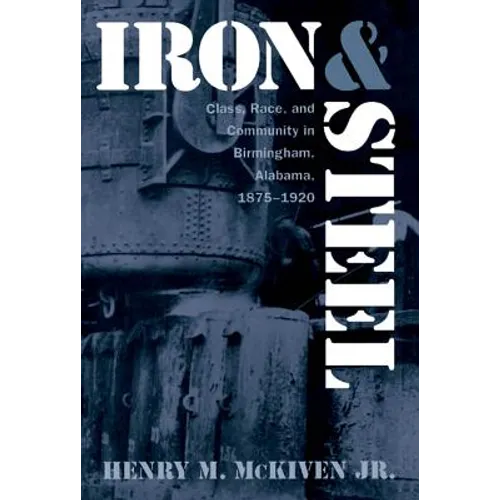
Iron and Steel: Class, Race, and Community in Birmingham, Alabama, 1875-1920 - Paperback

$68.85 USD
$68.85 USD
Sale Sold out
Shipping calculated at checkout.
In stock (100 units), ready to be shipped

Available Offers

Fastest Delivery Tomorrow With Vip DealOrder within 1 hr 8 mins.

Instant 10% Discount On HDFC Banks Credit/Debit Cards EMI and CreditCard

Secure checkout with
  • American Express
  • Apple Pay
  • Diners Club
  • Discover
  • Google Pay
  • Mastercard
  • PayPal
  • Shop Pay
  • Visa
  • Daily deals
  • Return policy
  • Payment method
  • Help center 24/7

Flight Range: Up to 1,000 meters (3,280 feet)

Maximum Speed: 45 kilometers per hour (28 miles per hour)

For all orders exceeding a value of 100USD shipping is offered for free.

Returns will be accepted for up to 10 days of Customer’s receipt or tracking number on unworn items. You, as a Customer, are obliged to inform us via email before you return the item.

Otherwise, standard shipping charges apply. Check out our delivery Terms & Conditions for more details.

View Product Details
Shopping cart
Product Product subtotal Quantity Price Product subtotal
Iron and Steel: Class, Race, and Community in Birmingham, Alabama, 1875-1920 - Paperback
$68.85/ea
$0.00
$68.85/ea $0.00

Product Description

by Henry M. McKiven (Author)

In this study of Birmingham's iron and steel workers, Henry McKiven unravels the complex connections between race relations and class struggle that shaped the city's social and economic order. He also traces the links between the process of class formation and the practice of community building and neighborhood politics. According to McKiven, the white men who moved to Birmingham soon after its founding to take jobs as skilled iron workers shared a free labor ideology that emphasized opportunity and equality between white employees and management at the expense of less skilled black laborers. But doubtful of their employers' commitment to white supremacy, they formed unions to defend their position within the racial order of the workplace. This order changed, however, when advances in manufacturing technology created more semiskilled jobs and broadened opportunities for black workers. McKiven shows how these race and class divisions also shaped working-class life away from the plant, as workers built neighborhoods and organized community and political associations that reinforced bonds of skill, race, and ethnicity.

Back Jacket

In this study of Birmingham's iron and steel workers, Henry McKiven unravels the complex dynamics of race relations and class struggle that shaped the city's social and economic order.

Author Biography

Henry M. McKiven, Jr., is assistant professor of history at the University of South Alabama.

Number of Pages: 240
Dimensions: 0.67 x 9.27 x 6.17 IN
Publication Date: April 17, 1995
you might like