Product Description
by Jeffrey D. Pugh (Author)
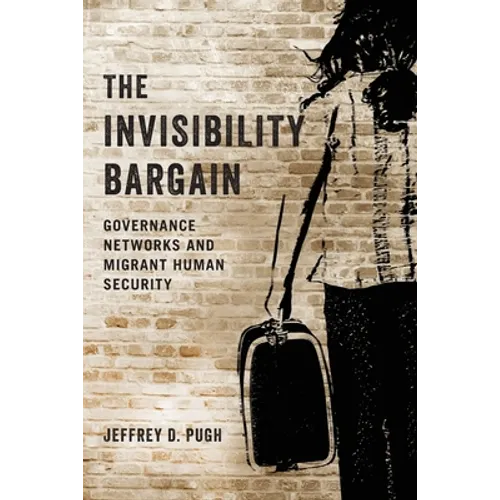
Migrants fleeing economic hardship or violence are entitled to a range of protections and rights under domestic and international law, yet they are often denied such protections in practice. In an era of mass migration and restrictive responses, migrant acceptance is often contingent on the expectation that they contribute economically to the host country while remaining politically and socially invisible. These unwritten expectations, which Jeffrey D. Pugh calls the "invisibility bargain", produce a precarious status in which migrants' visible differences or overt political demands on the state may be met with hostile backlash from the host society. In this context, governance networks of state and non-state actors form an institutional web that can provide indirect access to rights, resources, and protection, but simultaneously help migrants avoid negative backlash against visible political activism.
The Invisibility Bargain seeks to understand how migrants negotiate their place in receiving societies and adapt innovative strategies to integrate, participate, and access protection. Specifically, the book examines Ecuador, the largest recipient of refugees in Latin America, and assesses how it achieved migrant human security gains despite weak state presence in peripheral areas. Pugh deploys evidence from 15 months of fieldwork spanning ten years in Ecuador, including 170 interviews, an original survey of Colombian migrants in six provinces, network analysis, and discourse analysis of hundreds of presidential speeches and news media articles. He argues that localities with more dense networks composed of more diverse actors tend to produce greater human security for migrants and their neighbors. The book challenges the conventional understanding of migration and security, providing a new approach to the negotiation of authority between state and society. By examining the informalpathways to human security, Pugh dismantles the false dichotomy between international and national politics, and exposes the micro politics of institutional innovation.
Author Biography
Jeffrey D. Pugh is Assistant Professor in the McCormack Graduate School of Policy and Global Studies at the University of Massachusetts Boston, and the founding executive director of the Center for Mediation, Peace, and Resolution of Conflict (CEMPROC) in Quito, Ecuador. Pugh's research focuses on peacebuilding and non-state actors in the Global South, and he is a past president of the Middle Atlantic Council on Latin American Studies (MACLAS).