Product Description
by Dee Lawlor (Author)
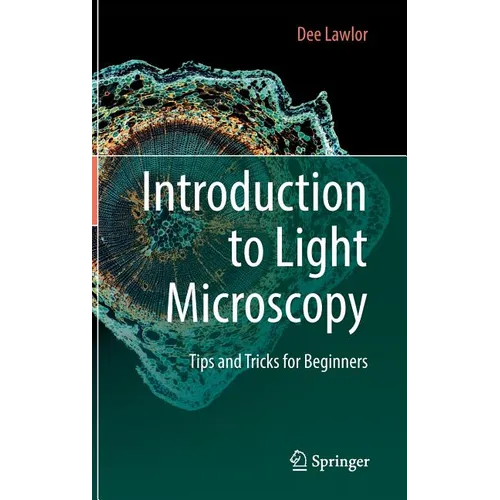
This book offers a beginner's guide to using light microscopes. It begins with a brief introduction to the physics of optics, which will give the reader a basic grasp of the behaviors of light. In turn, each part of the microscope is explained using clear and simple English, together withdetailed photographs and diagrams. The reader will learn the function, care and correct use of each part. A troubleshooting section also helps resolve some of the most common issues encountered in light microscopy.
Most people have a general idea of how to use a microscope, but many never get the full benefit, because they receive no training. With easy-to-follow steps and detailed images, this guide will help everyone achieve the best results, and be confident using their microscope.
This book is intended for anyone using a light microscope, such as university students, people in lab environments, hobbyists, educators who teach science to young children, and anyone with a general interest in these valuable tools.
Back Jacket
This book offers a beginner's guide to using light microscopes. It begins with a brief introduction to the physics of optics, which will give the reader a basic grasp of the behaviors of light. In turn, each part of the microscope is explained using clear and simple English, together withdetailed photographs and diagrams. The reader will learn the function, care and correct use of each part. A troubleshooting section also helps resolve some of the most common issues encountered in light microscopy.
Most people have a general idea of how to use a microscope, but many never get the full benefit, because they receive no training. With easy-to-follow steps and detailed images, this guide will help everyone achieve the best results, and be confident using their microscope.
This book is intended for anyone using a light microscope, such as university students, people in lab environments, hobbyists, educators who teach science to young children, and anyone with a general interest in these valuable tools.Author Biography
Dee Lawlor is a science writer and microscope specialist from Dublin, Ireland. She received her degree in Zoology from the University of Aberdeen in 2010, and then pursued a Masters in Microscopy and Image Analysis from the University College Dublin in 2012. After graduation, Dee worked in microscopy sales and then spent several years working as a technical support engineer for digital imaging systems at Leica Biosystems.
Her writing career began in 2016, when she started writing articles for a number of different scientific websites. Her specialist topics are microscopy, biology, and environmental sciences. She launched her own microscopy blog "What the Microscope Saw" in November 2017, where she regularly publishes special-interest articles.