Skip to content
Welcome To Our Store.
100,000+ Products for Home, Medical, Office & Classroom Needs
Search
Skip to product information
1 of 1

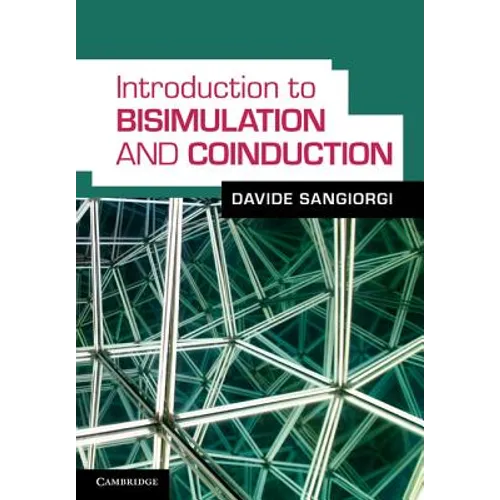
Introduction to Bisimulation and Coinduction - Hardcover

$189.72
$189.72
Sale Sold out
Shipping calculated at checkout.
In stock (100 units), ready to be shipped

Available Offers

Fastest Delivery Tomorrow With Vip DealOrder within 1 hr 8 mins.

Instant 10% Discount On HDFC Banks Credit/Debit Cards EMI and CreditCard

Secure checkout with
  • American Express
  • Apple Pay
  • Diners Club
  • Discover
  • Google Pay
  • Mastercard
  • PayPal
  • Shop Pay
  • Visa

Flight Range: Up to 1,000 meters (3,280 feet)

Maximum Speed: 45 kilometers per hour (28 miles per hour)

For all orders exceeding a value of 100USD shipping is offered for free.

Returns will be accepted for up to 10 days of Customer’s receipt or tracking number on unworn items. You, as a Customer, are obliged to inform us via email before you return the item.

Otherwise, standard shipping charges apply. Check out our delivery Terms & Conditions for more details.

View Product Details
Shopping cart
Product Product subtotal Quantity Price Product subtotal
Introduction to Bisimulation and Coinduction - Hardcover
$189.72/ea
$0.00
$189.72/ea $0.00

Product Description

by Davide Sangiorgi (Author)

Induction is a pervasive tool in computer science and mathematics for defining objects and reasoning on them. Coinduction is the dual of induction and as such it brings in quite different tools. Today, it is widely used in computer science, but also in other fields, including artificial intelligence, cognitive science, mathematics, modal logics, philosophy and physics. The best known instance of coinduction is bisimulation, mainly employed to define and prove equalities among potentially infinite objects: processes, streams, non-well-founded sets, etc. This book presents bisimulation and coinduction: the fundamental concepts and techniques and the duality with induction. Each chapter contains exercises and selected solutions, enabling students to connect theory with practice. A special emphasis is placed on bisimulation as a behavioural equivalence for processes. Thus the book serves as an introduction to models for expressing processes (such as process calculi) and to the associated techniques of operational and algebraic analysis.

Number of Pages: 260
Dimensions: 0.9 x 9.8 x 7.5 IN
Publication Date: November 28, 2011
you might like