Skip to content
Welcome To Our Store.
100,000+ Products for Home, Medical, Office & Classroom Needs
Search
Skip to product information
1 of 1

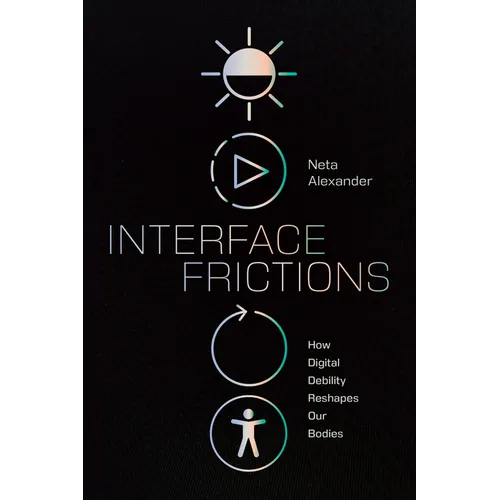
Interface Frictions: How Digital Debility Reshapes Our Bodies - Paperback

$46.91 USD
$46.91 USD
Sale Sold out
Shipping calculated at checkout.
In stock (97 units), ready to be shipped

Available Offers

Fastest Delivery Tomorrow With Vip DealOrder within 1 hr 8 mins.

Instant 10% Discount On HDFC Banks Credit/Debit Cards EMI and CreditCard

Secure checkout with
  • American Express
  • Apple Pay
  • Diners Club
  • Discover
  • Google Pay
  • Mastercard
  • PayPal
  • Shop Pay
  • Visa
  • Daily deals
  • Return policy
  • Payment method
  • Help center 24/7

Flight Range: Up to 1,000 meters (3,280 feet)

Maximum Speed: 45 kilometers per hour (28 miles per hour)

For all orders exceeding a value of 100USD shipping is offered for free.

Returns will be accepted for up to 10 days of Customer’s receipt or tracking number on unworn items. You, as a Customer, are obliged to inform us via email before you return the item.

Otherwise, standard shipping charges apply. Check out our delivery Terms & Conditions for more details.

View Product Details
Shopping cart
Product Product subtotal Quantity Price Product subtotal
Interface Frictions: How Digital Debility Reshapes Our Bodies - Paperback
$46.91/ea
$0.00
$46.91/ea $0.00

Product Description

by Neta Alexander (Author)

In Interface Frictions, Neta Alexander explores how ubiquitous design features in digital platforms reshape, condition, and break our bodies. She shows that while features such as refresh, playback speed, autoplay, and night mode are convenient, they can lead to "digital debility"--the slow and often invisible ways that technologies may harm human bodies. These features all assume an able-bodied user and at the same time push users to ignore their bodily limitations like the need for rest, nourishment, or movement. Building on the lived experiences of people with disabilities, Alexander explores alternative design solutions that arise from a multisensorial approach to communication. She demonstrates what can be gained from centering the nonaverage user, such as blind people who pioneered ways to control the playback speed of media, and Netflix subscribers with invisible disabilities like PTSD who successfully pushed the company to redesign its previews autoplay feature. Drawing on artworks, video games, and creative hacking by users with disabilities, Alexander challenges our understanding of media consumption, the attention economy, and the digital interface.

Author Biography

Neta Alexander is Assistant Professor of Film and Media at Yale University and coauthor of Failure.

Number of Pages: 232
Dimensions: 0.53 x 9 x 6 IN
Publication Date: August 22, 2025
you might like